
RADICAL HEALING · SGLA
Radical Healing
Don’t fight the symptom. Meet the root that keeps producing it.
There are times when we know exactly what isn’t working — and still find ourselves back in the same place.
- The same reaction.
- The same fear.
- The same kind of relationship.
- The same tightening.
The same pattern we can already explain perfectly well — and the explanation still hasn’t changed it. That is exactly where Radical Healing begins: work that brings together inner child healing, intergenerational and ancestral healing — what was passed down to us through the family without our choosing — and creating an optimal future through spiritual leadership. It starts not with “How do I get rid of this?”, but with a deeper question.
What created this pattern in the first place — and what is it still trying to do for me?
This work reaches for the root, but never by force.
- No breaking down defences
- No forcing insights
- No digging into the past just because it is there
We work with what is ready to move now.
- Working from the rootNot only managing how a pattern shows up.
- Emotion · body · consciousnessThe process doesn’t stay in talk and thinking.
- No fixed scriptEach session is shaped by what comes up in it.
- SGLA trainingNitzan completed Radical Healing training and its facilitator programme.
Root, not force
What is actually “radical” about Radical Healing?
The word can sound extreme. Here it means almost the opposite: “radical” comes from the Latin radix — root.
When a pattern keeps returning, you can keep working on how it shows up — or you can become curious about what sits underneath.
Radical Healing works at that layer. Not because everything has to become an excavation of the past, but because lasting change often begins when we stop fighting only what we can see on the surface.
On the surface
- Trying to control the reaction
- Thinking differently
- Avoiding the trigger
- Learning one more technique
Beneath
- What is this pattern protecting?
- When did it become a solution?
- Which fear, need, memory, belief or survival reflex is still holding it?
- Which part of us has not yet been given the chance to choose something else?

What I learned
The pattern is not the enemy
It is one of the most important things this work taught me: a pattern that has been with us for years is not necessarily a malfunction. Very often it began as a solution.
- Protecting ourselves
- Avoiding pain
- Staying in control
- Belonging
- Keeping away from danger
- Getting through
The trouble starts when life changes but the protective mechanism keeps running as if nothing has. Then we experience it as being stuck: an old solution applied again and again to a reality that is no longer the same.
Which is why one of the principles I value most here is this: we don’t try to destroy the pattern.
- 1First we understand it
- 2We acknowledge the role it played
- 3Only then does letting it go become a real option
Mind · emotion · body · consciousness
Not only the head — four dimensions of change
One of the things that shaped me most in my SGLA studies is its holistic view of a person: not only thought, emotion, body or consciousness, but one system in which all four constantly affect each other.
The mind · understanding
Seeing the structure and naming the pattern. Understanding the story we tell ourselves, and how choices, values and outcomes connect.
Insight alone does not always change a pattern — but without clarity it is hard to know what is asking to change.
Emotion · feeling
An emotion is not a fault to be silenced. It is information — and sometimes energy that was never allowed to move.
The work is not to make feelings “positive”, but to meet them without letting them make every decision.
The body · what it already knows
Patterns do not live only in thoughts. They show up in shoulders that never drop, in the jaw, the breath, the belly — in holding the body as if something is about to happen.
So breath, sensation, slowing down and sometimes movement can all be part of the work.
Consciousness · beyond the familiar story
Sometimes the question is not only “what happened to me?” but: who am I when I no longer have to be who I learned to be inside what happened?
This is where awareness, meaning, values and direction come in.
From the SGLA framework
From survival to creating a future
One of the central ideas in the SGLA framework is the difference between a life organised around survival and a life that begins to be created from direction.
Survival mode
Much of our energy goes into protection:
- Not making mistakes
- Not getting hurt
- Not losing
- Not changing too much
- Not stepping outside the frame that kept us safe before
And so, without meaning to, the past decides for the present — and the present produces more of the past.
Creating a future
This is not “positive thinking”. It begins when we can ask:
If I no longer have to act from the old protection — what do I want to create now?
- What matters to me?
- Who do I want to be in this?
- Which values lead me?
- What future am I building with today’s choice?
To me, this is where Radical Healing connects with something far wider than emotional release. Not only letting go of what was — making room for what could be.
Depth without drama
Emotional release — without turning pain into a performance
There is a belief in personal-growth circles that if a process was not stormy, not enough happened. I don’t work that way. Release is not measured by how hard someone cries, how many memories surface, or how far they break before they feel better.
Sometimes there are tears. Sometimes anger, trembling or a long sigh. And sometimes the change looks far less dramatic.
What it sometimes looks like
- The shoulders drop.
- The breath changes.
- A sentence that carried a charge for years no longer holds the same power.
- Someone realises they don’t have to react the way they always have.
- Something that was clenched simply lets go.
Intensity is not a measure of depth.
Listening before a plan
Working with what is ready — not with what we decided must change
You can arrive with a very clear subject:
- A relationship
- Anger
- Fear
- Feeling stuck
- A separation
- Career
- Something that keeps coming back
But that is not always where the process begins. Sometimes the thing we most want to “fix” is exactly what the system is not yet ready to open directly. So I don’t arrive with a script: there is an intention, a direction — and there is listening. If something else asks for room first, we work with it.
To me, that isn’t a detour from the process. It is the process.
Meaning and direction
Not only what to release — but what to return to
Change built only on “what do I want to get rid of?” stays tied to what we don’t want. In SGLA I learned to hold another question alongside it: where do I want to go?
Connecting to meaning and direction is not spiritual decoration. It can become a very practical anchor — because it is far easier to leave an old pattern once it becomes clear what we are saying yes to instead.
Where do I want to go?
- What really matters to me?
- What are my values when fear is not the one deciding?
- What gives me meaning?
- What do I want to bring to the world, to my relationship, my family, my work — or simply to my own life?
Depending on what fits, a session can include
- Breath
- Slowing down
- Attention to sensation
- Voice or sound
- Noticing where tension shows up in the body
- Time — for the system to come out of alert
The body
The body doesn’t stay outside the room
We can understand something perfectly and still feel the body hasn’t received the message. That is not a contradiction: the body is part of how we experience fear, safety, boundaries, overload and presence.
Not every session includes all of these, and there is no “right technique” to work through in order.
The tool serves the person. Not the person the tool.
The process
What a Radical Healing session with me looks like
It starts with a conversation — not a twenty-page questionnaire, and not an assumption that I already know what needs to happen.
First, together, we look at
- What brings you now
- What keeps returning
- Where you feel stuck
- What you already know about it
- And what you feel but can’t yet put into words
From there the work can move between
- Conversation and reflection
- Work with patterns and beliefs
- Emotional release
- Attention to the body
- Breath
- Energy work
- Sound
- Guided imagery or awareness
- Values, direction and intention
The tools are chosen from what comes up. No two sessions are the same.
Is this for me?
When Radical Healing can be a good place to start
When the pattern is familiar — but still returns
You understand it in your head, maybe even know where it came from, and in practice it keeps showing up.
After a period that changed something
A separation, a change, a loss of direction, a move, or a new stage of life that asks to be reorganised.
When you are living a smaller version of yourself
Not necessarily knowing why — only that there is more inside than reaches the outside.
When the past keeps taking part in present decisions
Even when you already know the circumstances have changed.
When you want to build, not only release
Not just to “stop something”, but to understand what comes in its place.
When one more insight is no longer enough
You have read, understood, analysed — and now you want to meet it in emotion, in the body and in experience too.
And when it is right to start somewhere else
Radical Healing is not meant to replace medical or psychological care. If you are in acute crisis, at risk, or need diagnosis, psychiatric help, trauma treatment or a clinical setting — start with a suitable professional.
Even within complementary work, “deep work” is not always what is needed. Sometimes what the system needs right now is:
- Stability
- Rest
- Routine
- Support
- Breath
- Food
- Sleep
- Time
Depth is not a goal in itself.
How many sessions?
I don’t sell a twelve-session package before we have met once.
Some people come for a single session around a particular crossroads and feel they have received what they needed. Others want a few more sessions to work with further layers. We check as we go.
If you would like a feel for how I work first, the Quantum Hour is a good place to begin.
- No promised outcomes
- No building dependence
- No deciding in advance that the road must be long
Where it comes from
Where Radical Healing comes from
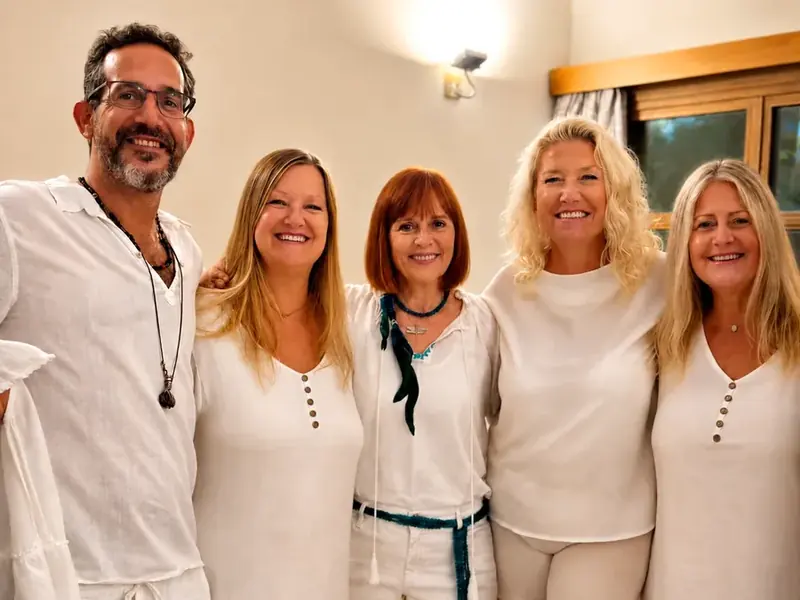
Radical Healing is taught within SGLA — the Sustainable Global Leadership Academy, founded by retired judge Shlomo Shoham, formerly Israel’s Commissioner for Future Generations.
The framework is built around a holistic view of leadership and human development. What sets it apart is working in four dimensions — mind · emotion · body · consciousness — not as separate compartments, but from the understanding that real change involves the whole person.
I studied Radical Healing within that framework and went on to complete the advanced facilitator training. What I bring to a session are the principles I learned there, woven into my own integrative way of working — not a replay of the course.
More about the path that led me here.
The learning setting
Where I learned
During my SGLA studies I was exposed to a wide circle of teachers, mentors and guests from leadership, awareness, the body, science and spirit — among them:
Dr. Bruce Lipton
Stem-cell biologist and author of The Biology of Belief, known for his public talks on the links he proposes between biology, environment and consciousness.
Gregg Braden
Author and international speaker exploring the connections between science, wisdom traditions and human potential.
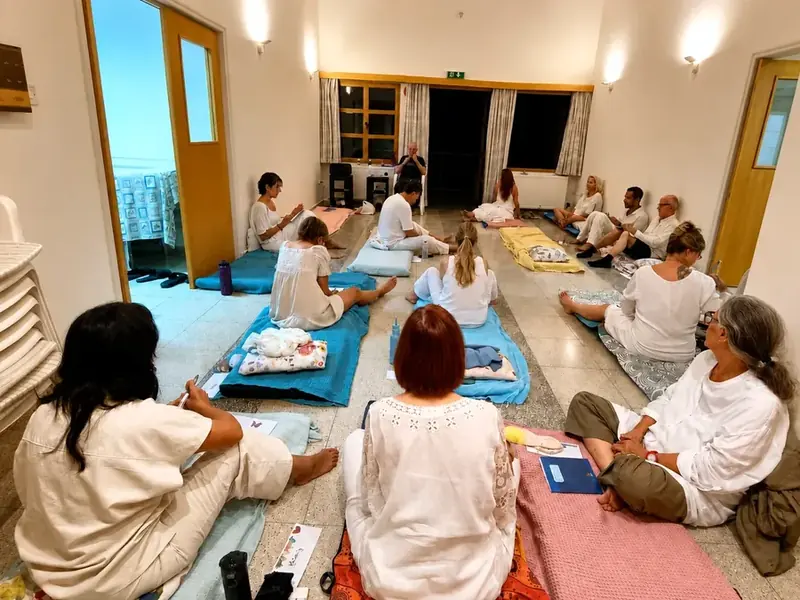
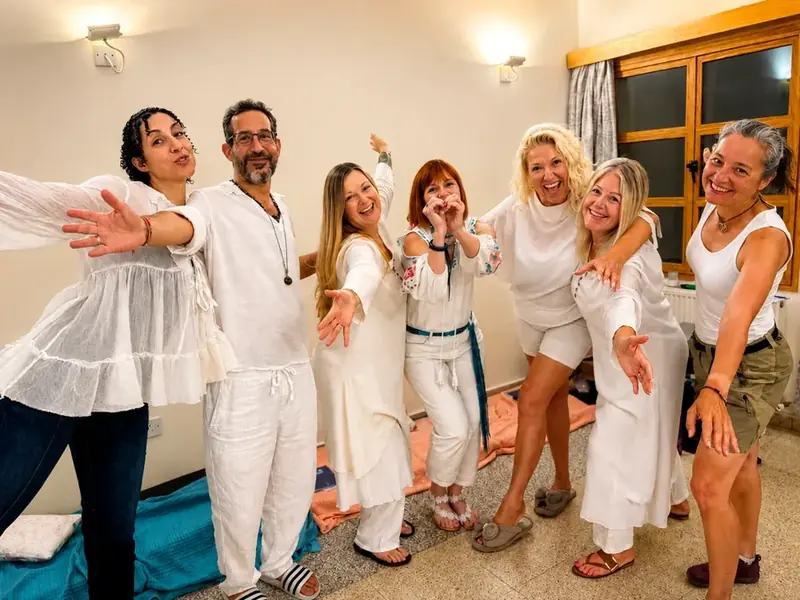
Mentioning these teachers and mentors describes the setting of my studies and my professional exposure. It does not imply their recommendation or endorsement of the work I offer.
Training
My background in this work
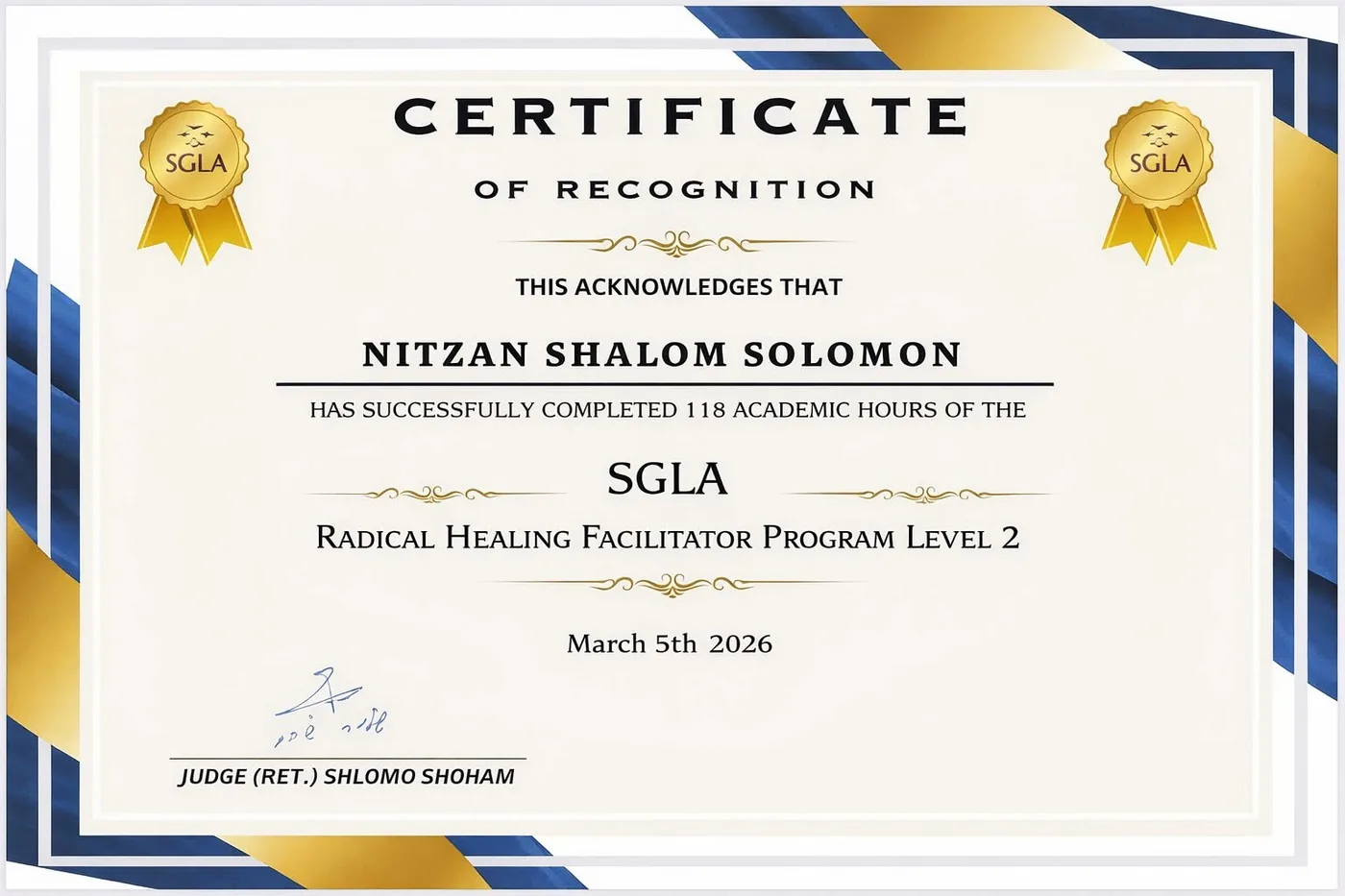
Radical Healing Facilitator — Level 2
Training in holding a process and facilitating individual and group work, including where the facilitator’s responsibility begins and ends.
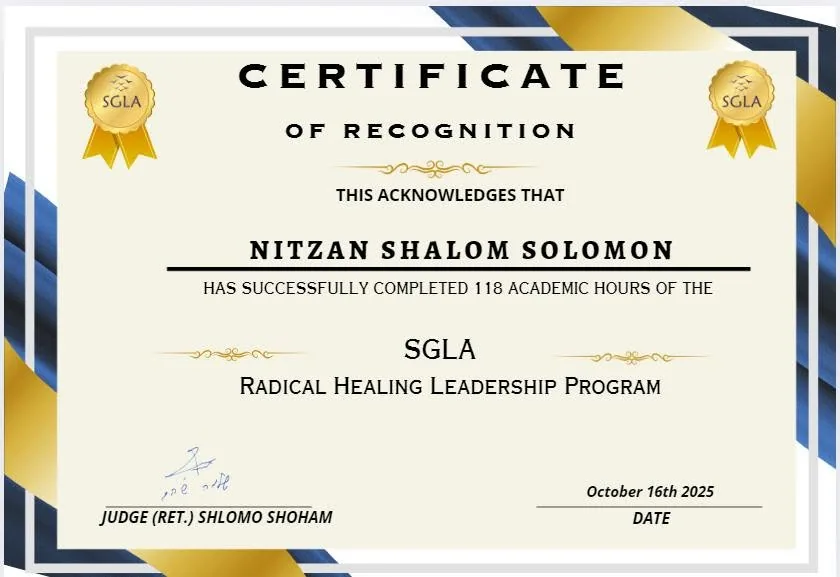
Radical Healing & Spiritual Leadership
Studying the SGLA holistic framework: patterns, emotion, body, awareness, meaning, direction and creating a future.
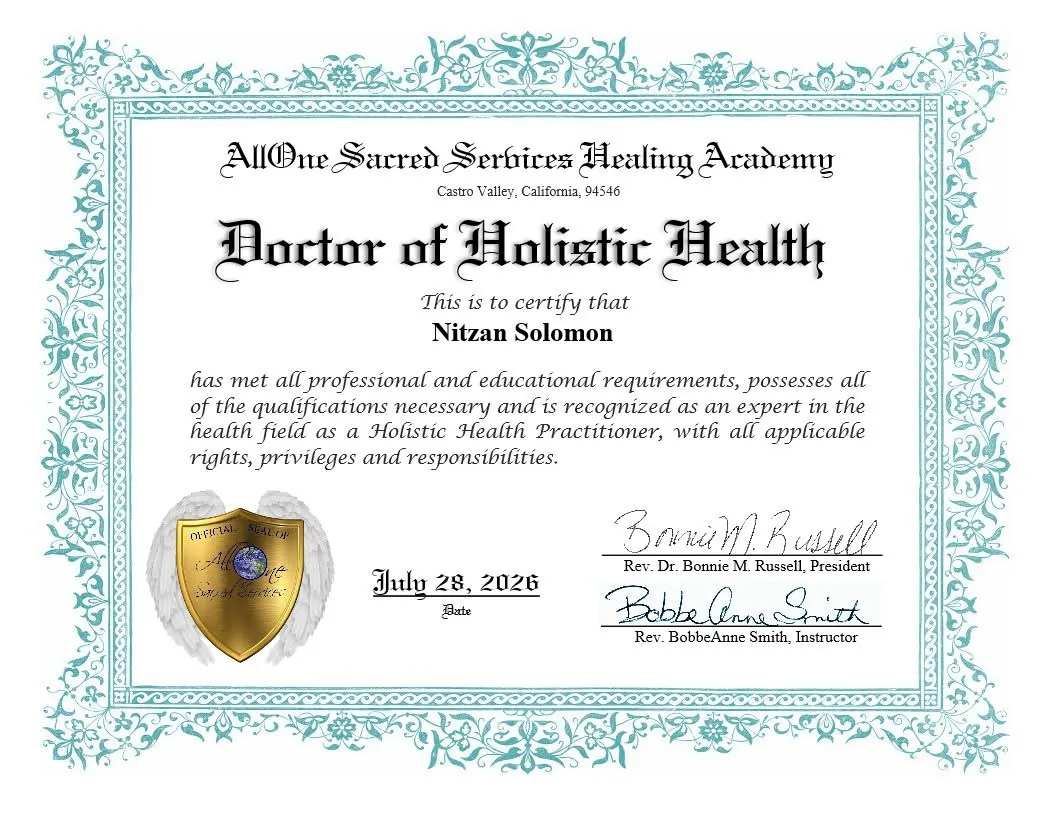
Doctor of Holistic Health (DHH)
A broad grounding in holistic health — anatomy, nutrition, herbs and lifestyle — which is the practical, least mystical layer underneath everything else.
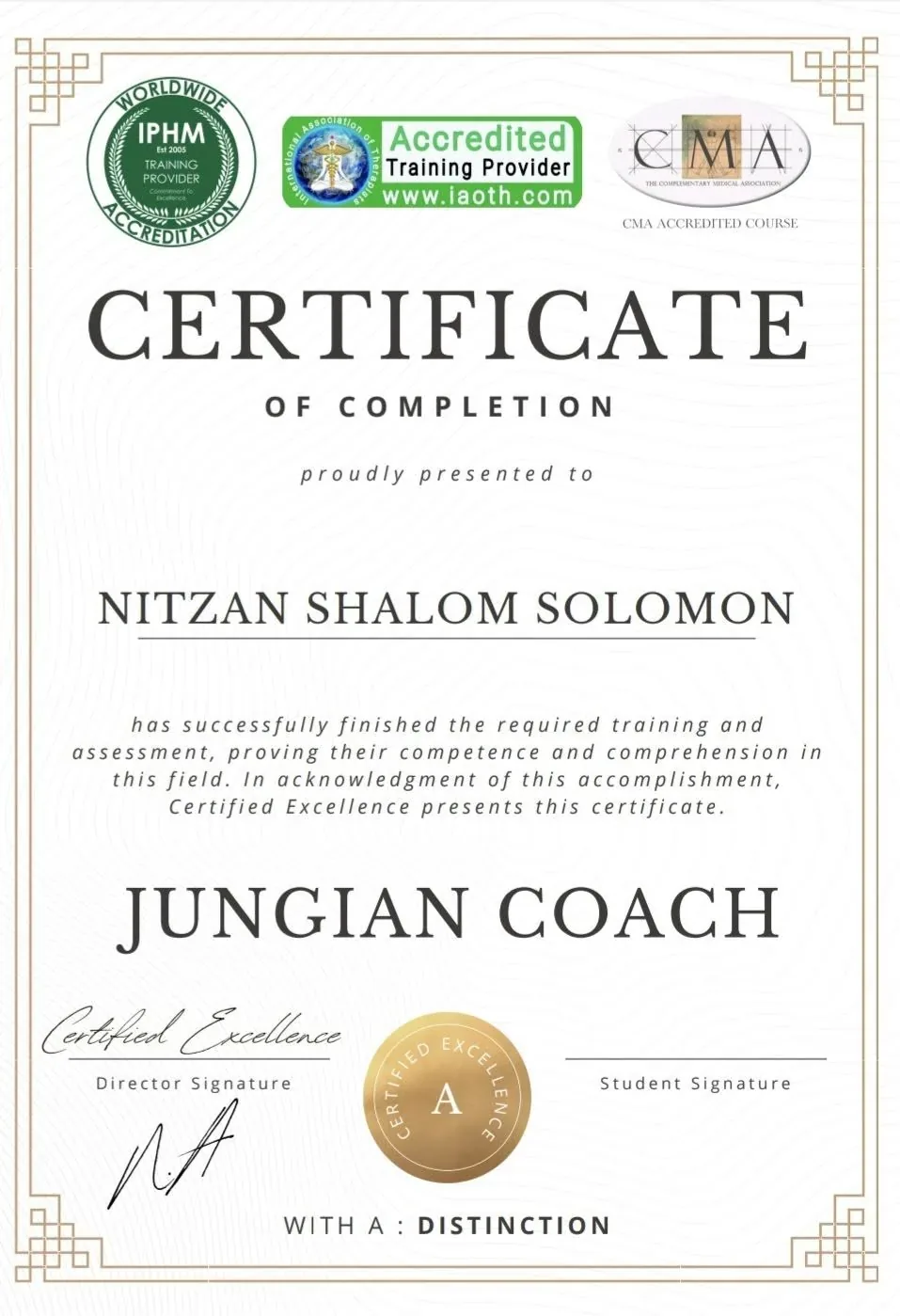
Certified Jungian Coach
Shadow, persona, archetype and individuation — the frame I use when someone's difficulty is a pattern rather than an event.
Common questions about Radical Healing
What is “radical” about Radical Healing?
Not intensity or extremes. The word points to working from the root: not only with what a pattern makes us do, but with the structure that keeps producing it.
Is this individual or group work?
At Quantum Healing Field the session offered here is individual and takes place remotely. My SGLA training also included working and facilitating within a group setting.
Where does the approach come from?
I learned Radical Healing within the SGLA framework. I use the principles I learned in that training and weave them into my own integrative approach.
Do I need to know the root of the problem in advance?
No. Most people arrive with what they can see on the surface, and we don’t need to guess what lies beneath. The process itself helps show what is asking for attention.
Will I have to relive difficult experiences?
That isn’t the aim. I don’t believe a person has to be flooded for something to change. We work at a pace that can be held, and what isn’t ready to open doesn’t need to be opened by force.
How is this different from coaching?
There is some overlap in questions of direction, values and choice, but the work can also include emotional, bodily, energetic and consciousness layers — not only goals and behaviour.
Is this trauma treatment?
No. The session is not presented as psychotherapy or clinical trauma treatment. Where trauma calls for professional treatment, please turn to a qualified therapist.
How many sessions are needed?
There is no fixed number. Some come for one session around a particular crossroads; others choose a process of several sessions. We decide according to what is actually happening.
Can I start now?
Yes. Sessions take place remotely. Send me a message or leave your details, and we will begin with a short conversation to see what fits.
This is complementary, wellbeing-oriented work. It is not psychotherapy, diagnosis, or medical or psychological treatment, and no outcome is promised. Full health disclaimer.
RADICAL HEALING
Not everything we learned to survive with has to come with us
Sometimes change doesn’t ask for another war with ourselves. It asks us to understand why the pattern was born, to listen to what it is still trying to protect, to thank it for the work it has done — and then to see whether it is time to choose differently.