
SESSION · TRAUMA-INFORMED SUPPORT
Trauma-Informed Support & Integration
Complementary support for grounding, regulation and rebuilding after overwhelming experiences.
Sometimes the event is over — but the system still behaves as though it is not.
- The body remains alert.
- Rest feels difficult.
- Silence feels suspicious.
- Trust becomes complicated.
Certain people, places or tones of voice activate far more than the present moment seems to justify. For some people the impact is obvious: hypervigilance, overwhelm, panic, intrusive reactions or difficulty settling. For others it is quieter — avoidance, numbness, disconnection, difficulty trusting, relationship patterns, loss of identity, or a persistent sense that something bad is about to happen even when life is relatively calm.
Trauma-informed support with Nitzan Solomon is a complementary one-to-one space, held remotely, for people who have lived through difficult, overwhelming or prolonged experiences and want to work gently with what remains in the present: grounding, triggers, nervous-system regulation, boundaries, body awareness, identity, relationships, daily stability — and rebuilding a life that is not organized entirely around survival.
This is not trauma therapy, psychotherapy or clinical PTSD treatment. If you have diagnosed PTSD, significant trauma symptoms or acute mental-health needs, this work should only be considered complementary to appropriate professional care.
- Trauma-informedSafety, choice and pacing before technique
- One-to-onePersonal support, held remotely
- Alongside therapyCan complement existing trauma-focused treatment
- Not clinicalNot PTSD diagnosis, psychotherapy or exposure therapy
In plain language
What Is Trauma-Informed Support?
Trauma-informed support begins with one central idea: what happened matters — but so does what the system learned from it.
Two people can go through similar events and be affected in very different ways. The impact may depend on how long the experience lasted, how much control or choice existed, whether the threat came from someone close, what support was available afterward, what happened before it — and how safe life feels now.
So the work does not begin with “Tell me everything that happened.” It begins with: What is happening now? How is the past still showing up in the present? And what can help create more stability, choice and capacity today?
At a glance
- Focus: trauma-informed complementary support
- Format: one-to-one, remote
- Core themes: grounding · triggers · nervous system · boundaries · body awareness · identity · relationships · integration
- Approach: gradual · choice-based · non-forcing · grounded
- Can complement: existing therapy or trauma-focused treatment
- Not: PTSD diagnosis, trauma psychotherapy, exposure therapy or psychiatric care
What we can work with
Post-Traumatic Stress in Daily Life: Hypervigilance, Triggers, Disconnection
Post-traumatic stress does not look the same in everyone. These are three of the most common ways it shows up in daily life.
Hypervigilance & feeling unsafe
Some people remain in a state of readiness long after the original danger has passed: difficulty relaxing, constantly scanning people or rooms, needing control, strong reactions to uncertainty, or a feeling that something is about to go wrong.
The goal is not to tell the nervous system to “calm down” — it is to create conditions in which it can notice that the present is different from the past.
Triggers
A trigger is not always dramatic. It may be a tone of voice, a message that is not answered, a door closing, a smell, a facial expression, a date, silence, conflict, or somebody becoming emotionally distant.
We map what happens before activation, how it appears in the body, what thought follows and which response takes over automatically. Understanding the sequence can create more room for choice.
Disconnection, numbness & shutdown
Not every trauma response looks like fear. Sometimes it looks like numbness, distance, difficulty feeling or being present — “I understand what happened, but I do not really feel connected to it.”
We work gently with present-day patterns, without forcing emotional intensity. If dissociation is frequent, severe or affects functioning, professional trauma assessment and treatment come first.

Grounding
Grounding: Telling “Then” From “Now”
Grounding is one of the most useful tools in trauma-informed work. Its purpose is not to erase what happened — it is to help the system distinguish between what is happening now and what it learned to expect.
- Looking around the room
- Feeling your feet or the chair
- Opening your eyes
- Movement
- Water
- Sound
- Touching an object
- Naming what is around you
- The date and the place
The tools are intentionally simple. When a system is overwhelmed, simple is often more useful than complex.
The nervous system
Trauma and the Nervous System
Trauma can influence the way the nervous system responds to perceived threat. I do not promise to “reset your nervous system,” and I do not use phrases such as “release all trauma from the vagus nerve.” The work is more grounded than that.
- Sleep
- Routine
- Movement
- Rest
- Breath
- Reducing overload
- Recovery time
- Boundaries
- Recognizing activation earlier
We look at the conditions that support regulation. The aim is not instant transformation.
It is gradually increasing the ability to notice what is happening — and having more options in how to respond.
The body
Body Awareness — Without Forcing the Body
Trauma work often includes the phrase “come back into the body.” But for some people, the body is precisely where it feels hardest to be.
So there is no rule that says close your eyes, go inward, feel everything, or stay with an uncomfortable sensation. You may keep your eyes open. Stand. Move. Pause. Work from the outside in.
Body awareness can simply mean noticing where tension appears, what changes when a subject comes up, what feels supportive, and what signals that activation is increasing.
The goal is not to force embodiment. It is to make the body a little less like a place that must be escaped.

Breath
Breathwork for Trauma — Only When It Helps
I have substantial training in breathwork, which is exactly why I do not assume breath is always the correct tool.
For some people, slower breathing or directed breath can support settling and presence. For others, focusing inward on breathing may increase discomfort or activation. If it does not help, we do not use it. Breath, sound & consciousness goes further into breath where it is the right tool.
The person comes before the technique.
Other options
- Movement or walking
- Voice
- Looking around the room
- Contact with the floor
- Music
- Water
- Simply conversation
At any point, you can
- Say no
- Pause
- Change the subject
- Skip an exercise
- Open your eyes
- Stand up
- Ask for a break
- End the session
Boundaries & choice
Safety and Choice Come Before Technique
Many traumatic experiences involve loss of control, choice or personal boundaries. That is why choice is not a small detail in this work. It is central.
There is no attempt to “break resistance.” There is no reward for going deeper faster. The work is based on consent and cooperation.
Sometimes one of the most important experiences a person can have is: “I said stop — and the other person actually stopped.”
Survival patterns
Survival Patterns Once Had a Job
Some of the patterns we struggle with today once served an important function.
People-pleasing
may have reduced conflict.
Control
may have created a sense of predictability.
Disconnection
may have protected against overwhelm.
Hypervigilance
may have helped detect danger early.
Extreme independence
may have developed when relying on others did not feel safe.
The better question
Not “What is wrong with me?” — but “What was this pattern trying to do for me?”
This is where my Radical Healing background is especially useful. Understanding a pattern does not mean it is still needed — it means we understand it before trying to remove it.
Identity
Trauma, Identity & Jungian Work
Over time, difficult experiences can move from “Something happened to me” to “This is who I am.”
- “I cannot trust anyone.”
- “I am weak.”
- “I must always be strong.”
- “I have to stay ready.”
- “People eventually hurt me.”
My Jungian coaching background can sometimes help us work with the identity that formed around survival. This is Jungian-informed coaching and reflection — not Jungian psychotherapy.
Jungian-informed coaching
- Shadow — parts of ourselves that became unacceptable, hidden or disconnected
- Persona — the version of ourselves we learned to present in order to function or stay safe
- Individuation — a broader, more integrated identity not organized around one survival role
Relationships
Trauma & Relationships
For many people, the ongoing impact of trauma becomes most visible inside relationships.
Sometimes the issue is not simply “relationship anxiety.” It is that the nervous system learned that closeness and danger can exist in the same place.
When relationship dynamics are the central focus, Toxic Relationships & Narcissistic Dynamics may be the more appropriate entry point.
We may look at
- Trust
- People-pleasing
- Fear of rejection or abandonment
- Avoidance and fear of intimacy
- Control
- Difficulty saying no
- Constantly reading the room for danger
Routine & rebuilding
Integration Is Not Always Dramatic
Sometimes the most meaningful work after trauma lives in ordinary things.
- Sleeping at a more consistent time
- Eating regularly
- Going outside
- Moving the body
- Returning a message
- Keeping one boundary
- Knowing who to contact
- A safe corner at home
Or recovering from one difficult hour without losing the entire day. These may sound small — but a stable life is usually built from small things repeated often.
The goal is not only to feel less distressed. It is to gradually build a life with more stability, agency and meaning.
Spirituality
Spirituality — Only When It Supports the Ground
My wider work also includes meditation, consciousness, energy work and channeling. But in trauma-informed support, these are never more important than stability.
I do not reduce trauma to “a blocked chakra,” “karma” or “your soul chose this” — unless you bring that frame yourself and want to explore it.
Trauma does not need to be spiritualized in order to be meaningful.
In practice
- If meditation helps, we can use it. If it activates you, we do not.
- If guided imagery is supportive, good. If it feels too far from the ground, we stay with the room.
- If energetic language helps you make sense of your experience, we can work with it.
Less judgment. Less pressure.
- More respect for pacing
- Fewer assumptions
- More understanding that a behaviour that looks dysfunctional today may once have been intelligent survival
First-hand
Personal Experience — and What It Is Not
My connection to this work is not only academic. I have lived through enough difficult experiences, survival patterns and periods of rebuilding to understand the gap between “I know I am safe” and “My system does not fully believe that yet.”
I know something about functioning while carrying more than people around you can see. About patterns that once helped you survive and later become difficult to live with. About rebuilding trust, routine, boundaries, relationships, the body — and a sense of self that is wider than what happened.
Lived experience is not a clinical trauma qualification. It does, however, shape how I hold this work. More about my path.
The first session
What Happens in the First Session?
The first session is not an investigation of the traumatic event. We begin with orientation.
What is happening now?
What brought you here, what is difficult today, what has changed — and what you want support with.
What already helps?
Anything that already gives the system a little more stability.
- People
- Places
- Music
- Animals
- Nature
- Routine
- Movement
- Work
How do you know activation is increasing?
Do you become quiet? Talk faster? Feel hot, cold, disconnected or restless? Want to leave?
We want to recognize the signs before full overwhelm.
How do we pause?
We agree in advance on a simple way to stop — a word or a hand movement is enough.
What is the next useful step?
Not the deepest possible step. The most useful one.
Over time
Four Areas We May Work With
Stability
Sleep, grounding, routine, support, safe-enough people and environments.
Patterns
Triggers, avoidance, hypervigilance, people-pleasing, control, disconnection or relationship responses.
Identity
Who did I need to become to survive? And what no longer needs to define me now?
Rebuilding
Relationships, meaning, health, boundaries, creativity — something not organized entirely around preventing the next threat.
Who it may suit
Who May Find This Session Helpful?
The past still shapes the present
You have been through a difficult or overwhelming experience, and it still seems to influence how you live now.
Triggers or hypervigilance
Strong reactions, constant readiness or difficulty settling — even when life is relatively calm.
Trust and boundaries
Trust, closeness or saying no have become difficult, and you want more grounding, routine and stability.
You are already in therapy
You want complementary integration support alongside it — not instead of it.
Pacing over disclosure
You prefer choice to forced disclosure, and want to work from the present rather than repeatedly retelling the past.
Grounded, and open to meaning
An approach that can include body, meaning and spirituality — without confusing them with clinical treatment.
When Professional Trauma Treatment Should Come First
This service is not enough on its own when there is any of the following. In those situations, a psychologist, psychotherapist, psychiatrist or another appropriately qualified trauma professional should lead the work.
- Frequent or significant flashbacks
- Severe dissociation
- Recurrent trauma nightmares affecting functioning
- Acute mental-health crisis
- Self-harm or suicidal thoughts
- Significant impairment in daily functioning
- Diagnosed PTSD requiring treatment
- A need for structured trauma processing
My support may sometimes exist alongside that care. Not instead of it.
If There Is Immediate Risk
If you are currently unsafe, in immediate danger from another person, thinking about harming yourself or that you do not want to live, experiencing severe confusion, or in an acute mental-health crisis — this session is not the first step.
Immediate professional or emergency support comes first. Safety takes priority over every process.
- Call your local emergency number
- In Israel: Magen David Adom 101 · Police 100
- ERAN emotional first aid (Israel): 1201
- NATAL trauma helpline (Israel): 1-800-363-363
The background I bring
Relevant Training & Background
Lived experience
Personal experience with difficult life events, survival patterns and rebuilding. Not a clinical qualification — it contributes to the way I listen and pace this work.
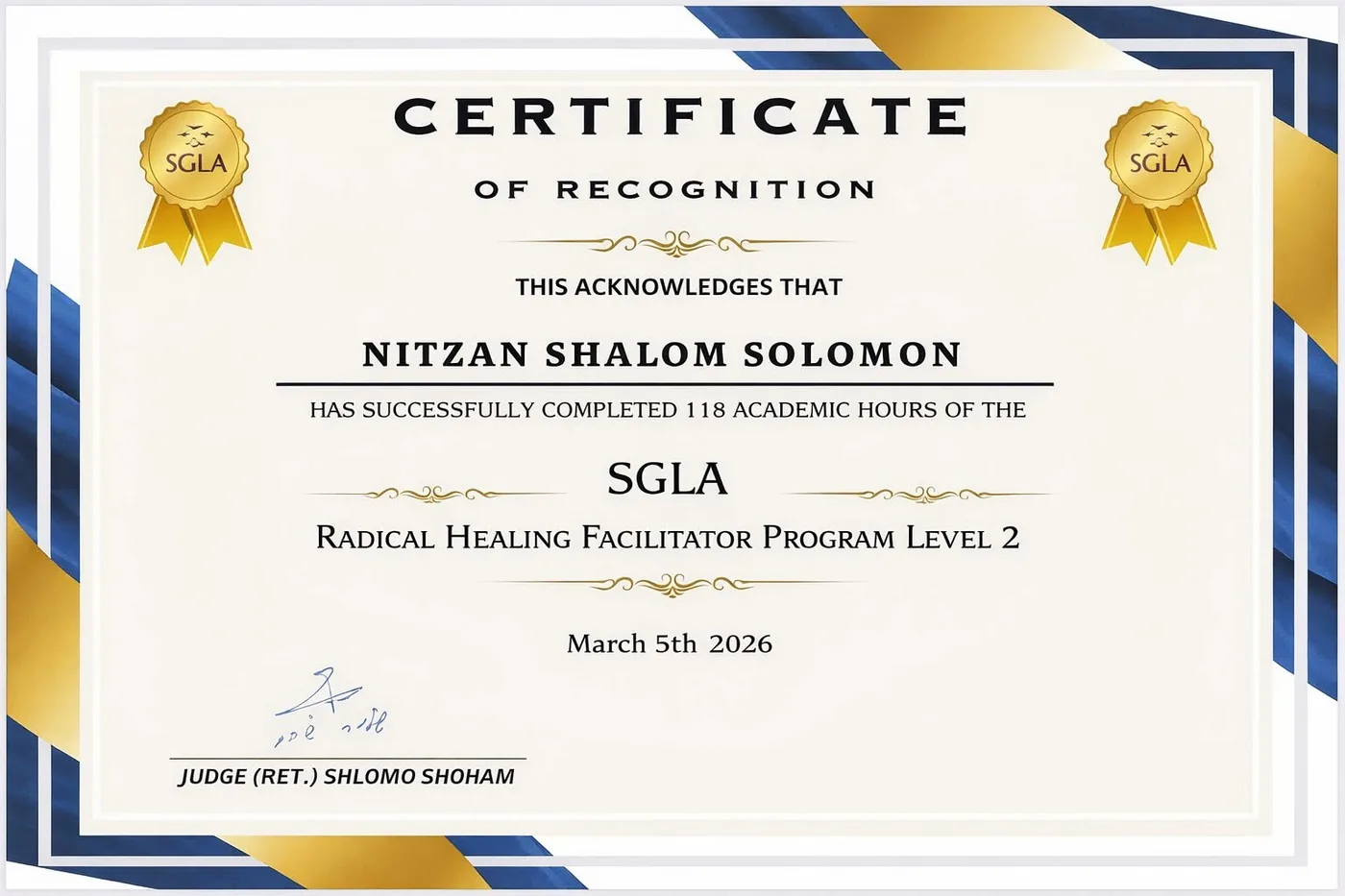
Radical Healing Facilitator · Level 2
Training in patterns, emotion, responsibility, choice and structured change processes.
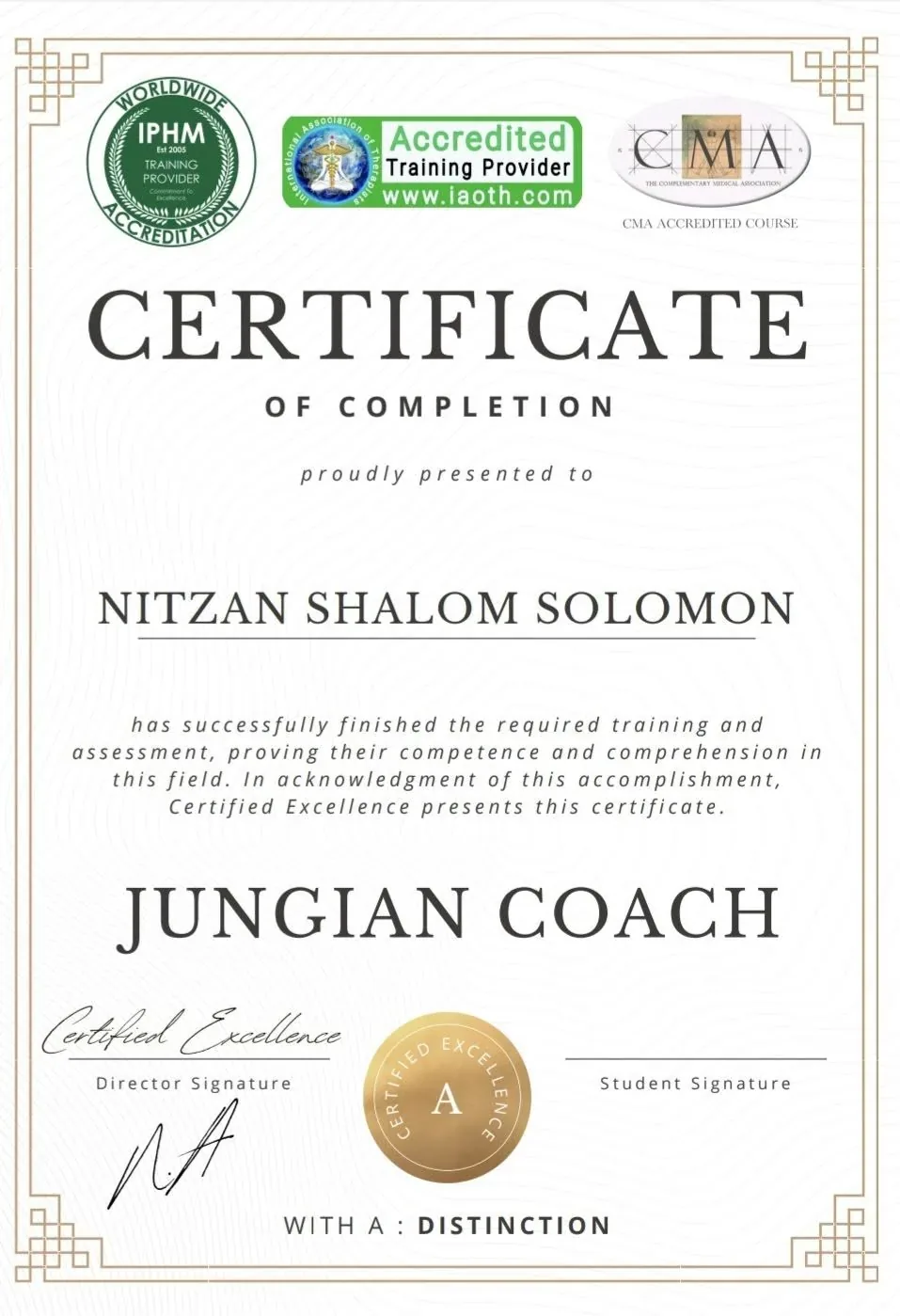
Certified Jungian Coach
Jungian-informed coaching: shadow, persona, archetypes and individuation. A coaching qualification — not psychotherapy licensure.
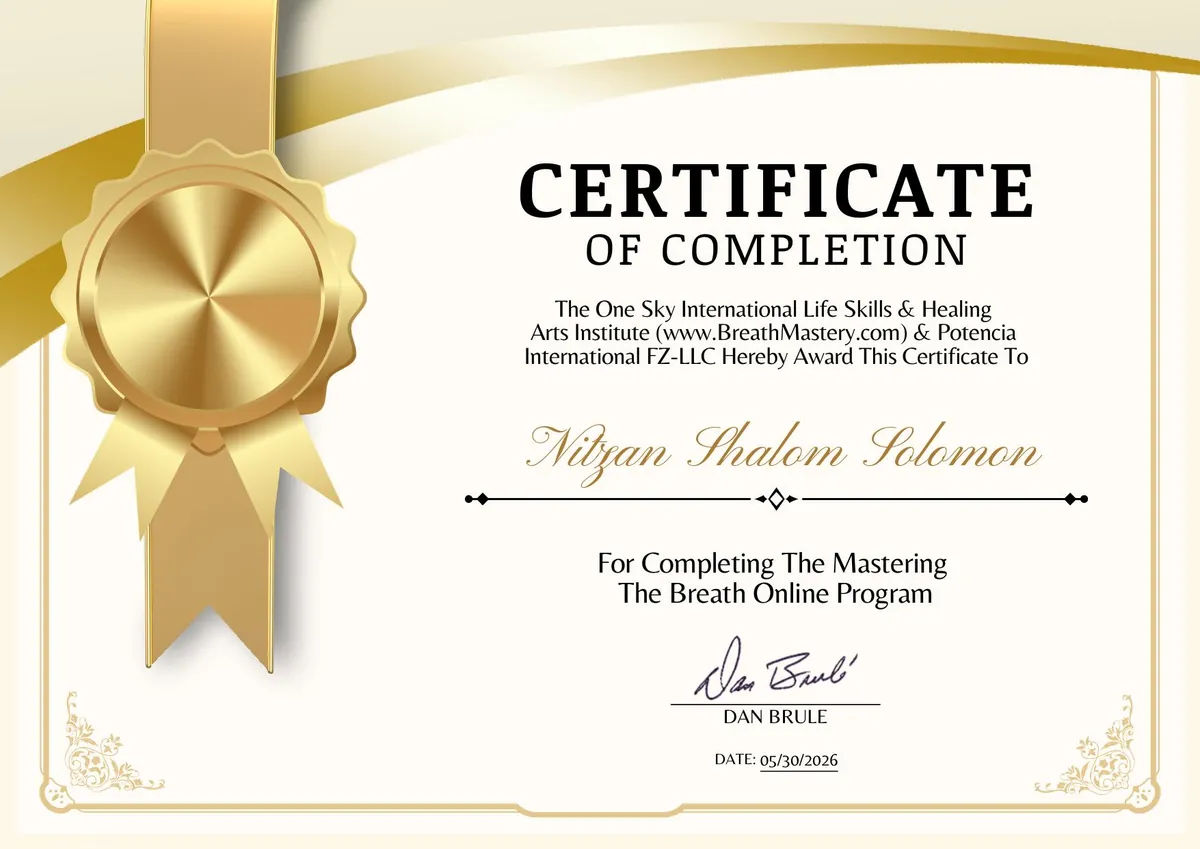
Breath Mastery
Breath as a directed tool for internal state and regulation — including when breath-focused work may not be appropriate.
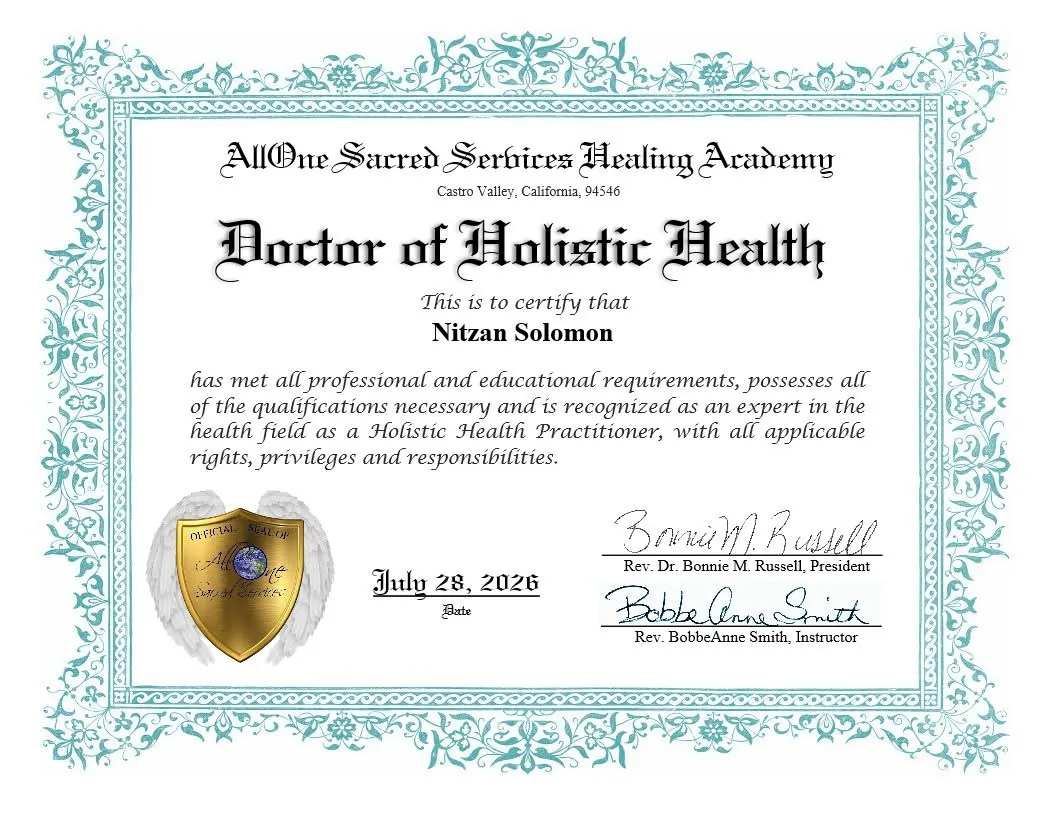
Doctor of Holistic Health · DHH
Holistic health, lifestyle, body awareness, nervous-system concepts and meditation. Not an MD and not a medical licence.
Questions About Trauma-Informed Support and PTSD
Do you treat PTSD?
No. PTSD is a clinical condition. I do not diagnose it, and I do not provide psychotherapy or clinical PTSD treatment. This work may be used as complementary support around grounding, routine, boundaries, identity and integration.
What is the difference between trauma-informed support and trauma therapy?
Trauma therapy — for example trauma-focused CBT, EMDR or prolonged exposure — is clinical treatment delivered by licensed professionals and aimed directly at processing trauma and reducing PTSD symptoms. Trauma-informed support is an approach that puts safety, choice, pacing and grounding first and works around everyday life and integration. This page offers the second, never as a replacement for the first.
Do I have to describe what happened in detail?
No. You can work entirely from what is happening now: triggers, body responses, relationships, boundaries, routine and current patterns. You decide how much of the story enters the session.
Can I work with you while I am seeing a therapist?
Yes — in many cases that is the most appropriate way to use this service. Clinical treatment can address PTSD or trauma directly, while this work focuses on complementary areas around everyday life and integration.
Are sessions online?
Yes. Sessions are one-to-one and held remotely, so you can take part from a place where you feel settled.
Do we always use breathwork?
No. Breath is one possible tool. If it increases activation or simply does not help, we use something else.
Do you use hypnosis or regression to recover traumatic memories?
No — not within this service. I do not use hypnosis to “discover,” reconstruct or verify traumatic memories.
Is this psychological or spiritual?
It can include both, but it does not have to. The work can remain completely grounded and practical. If meditation, spiritual language or energy work genuinely supports you, those elements can be included carefully.
What if the session becomes too much?
We slow down or stop. At any moment you can change the subject, skip an exercise, open your eyes, stand, take a break or end the session.
How many sessions will I need?
There is no fixed number, and I do not sell a guaranteed timeline. We look at whether the work is useful and continue only when there is a clear reason to do so.
What if I do not know whether what happened “counts” as trauma?
You do not need to define it before coming. We can begin with how the experience is affecting your life now. If symptoms suggest PTSD or another condition that needs professional assessment, I will encourage you to seek that assessment.
What about Complex PTSD?
If you have diagnosed PTSD, Complex PTSD (C-PTSD), significant dissociation or substantial impairment, clinical trauma care should remain central. This service may only be complementary when there is enough stability and appropriate professional support.
Trauma-Informed Support & Integration is complementary wellbeing and integration support. It is not trauma treatment, psychotherapy, PTSD treatment, diagnosis or psychiatric care, and it does not replace care from appropriately licensed professionals. Health disclaimer.

TRAUMA-INFORMED SUPPORT & INTEGRATION
More Stability. More Choice. More of Your Life Back.
The goal of this work is not to make you repeatedly return to what happened. It is to understand how the past is still shaping the present — and what can change now: more grounding, more boundaries, more agency, more trust in yourself, and more capacity to notice what is happening before the old survival response takes over.
The past may remain part of your story. It does not have to hold the pen forever.