Session
Breath, Sound & Consciousness
COMING SOON · REMOTE SESSIONS & FUTURE GROUP EXPERIENCES
Some experiences do not need more analysis.
Sometimes we need to breathe.
Sometimes we need to stop talking long enough to actually feel what is happening inside us.
Sometimes a tone, vibration, rhythm or moment of silence reaches a place that words simply do not.
Breath, Sound & Consciousness brings together three major areas of my work: conscious breathwork, sound and vibration, and guided meditation / altered-state exploration.
They can be used individually.
But I am especially interested in what happens when they meet.
Breath
Breathing is one of the few processes in the body that happens automatically — yet can also be consciously influenced.
That makes it an extraordinary bridge.
Between automatic and intentional.
Between body and awareness.
Between activation and relaxation.
Between what is happening to us and how we choose to meet it.
My breathwork studies include Dan Brulé’s Mastering the Breath training.
I am continuing this path toward deeper training within Dan Brulé’s practitioner pathway.
Conscious Breathing
Depending on the person and the purpose of the session, breathwork may involve: – breath awareness – relaxation practices – conscious connected breathing – rhythm and pacing – energising or calming breath patterns – breath combined with movement – breath combined with meditation – breath combined with sound – observing emotional or physical responses as they arise
There is no prize for breathing harder.
More intense is not automatically more effective.
The breath is something we learn to listen to, not something we need to conquer.
Sound
Sound works differently.
You do not only hear it.
You experience vibration.
Rhythm, resonance, silence, harmonic relationships and sustained tones can alter the way a space feels and can influence attention, relaxation and subjective states of consciousness.
My sound-healing training includes multiple levels of study and certification across different instruments and approaches, including:
Sound Healing Fundamentals Crystal & Sound Healing Crystal Singing Bowls Tibetan Singing Bowls Tuning Forks Singing Pyramid work
Advanced / Expert-Level Sound Healing studies
Rather than treating each instrument as a separate service, I see them as different voices inside the same language.
Crystal Bowls
Crystal singing bowls can create rich, sustained tones and layers of resonance.
They may be used to support relaxation, meditation, inward attention and the transition from ordinary mental activity into a more receptive state.
Tibetan Bowls
Tibetan-style singing bowls offer a different acoustic character — textured, complex and deeply physical.
Their tones can be incorporated into meditation, grounding practices and sound journeys.
Tuning Forks
Tuning forks bring sound into a much more focused form.
Their clear tones and vibration can be incorporated into sound-based awareness practices and energetic work.
I do not present a particular frequency as a medical treatment or claim that one number magically cures a condition.
Frequency
I have spent a great deal of time exploring frequency-based audio, binaural and meditative soundscapes, brainwave-oriented audio concepts and combinations of tone, rhythm and guided states.
Sometimes frequency means a measurable property of sound.
Sometimes people use the word metaphorically to describe mood, energy or state.
Those are not the same claim.
Meditation & Guided States
My approach has been influenced by several different streams of study and practice, including consciousness-exploration work associated with The Monroe Institute, meditative approaches within Shlomo Shoham’s work, guided imagery, breath practices and my broader study of altered and expanded states of consciousness.
I do not believe there is one correct meditation.
For some people, stillness works.
For others, movement.
Some respond strongly to sound.
Some to breath.
Some to imagery.
When Breath, Sound & Meditation Meet
A session may begin with simple breathing.
The breathing changes.
The body begins to settle.
Sound enters.
Attention moves inward.
A guided meditation or imagery process may follow.
Or perhaps nothing needs to follow.
Breath becomes rhythm.
Sound becomes space.
What a Session May Include
– conscious breathwork – breath awareness – guided relaxation – meditation – guided imagery – crystal singing bowls – Tibetan bowls – tuning forks – sound journeys – frequency-based audio – ambient and meditative soundscapes – energetic awareness – silence and integration
The purpose is to use what serves the experience.
Individual Sessions
Initially, this work will be available remotely.
Where an instrument or physical vibration requires being in the same space, those elements will become more central once in-person work begins.
Group Experiences · Coming Soon
Future: – small online groups – in-person sound & breath experiences – Quantum Hour integration – audio / meditation library
Availability
COMING SOON
Initial experiences will be offered remotely after the professional insurance and practice framework are in place.
Related work
Breath is often the fastest route in when talking has stopped helping. It sits close to energetic work, and pairs naturally with holistic health when the nervous system is the thing that needs attention. Preparing properly matters more here than for most sessions.
Relevant Training
The background behind this work
-
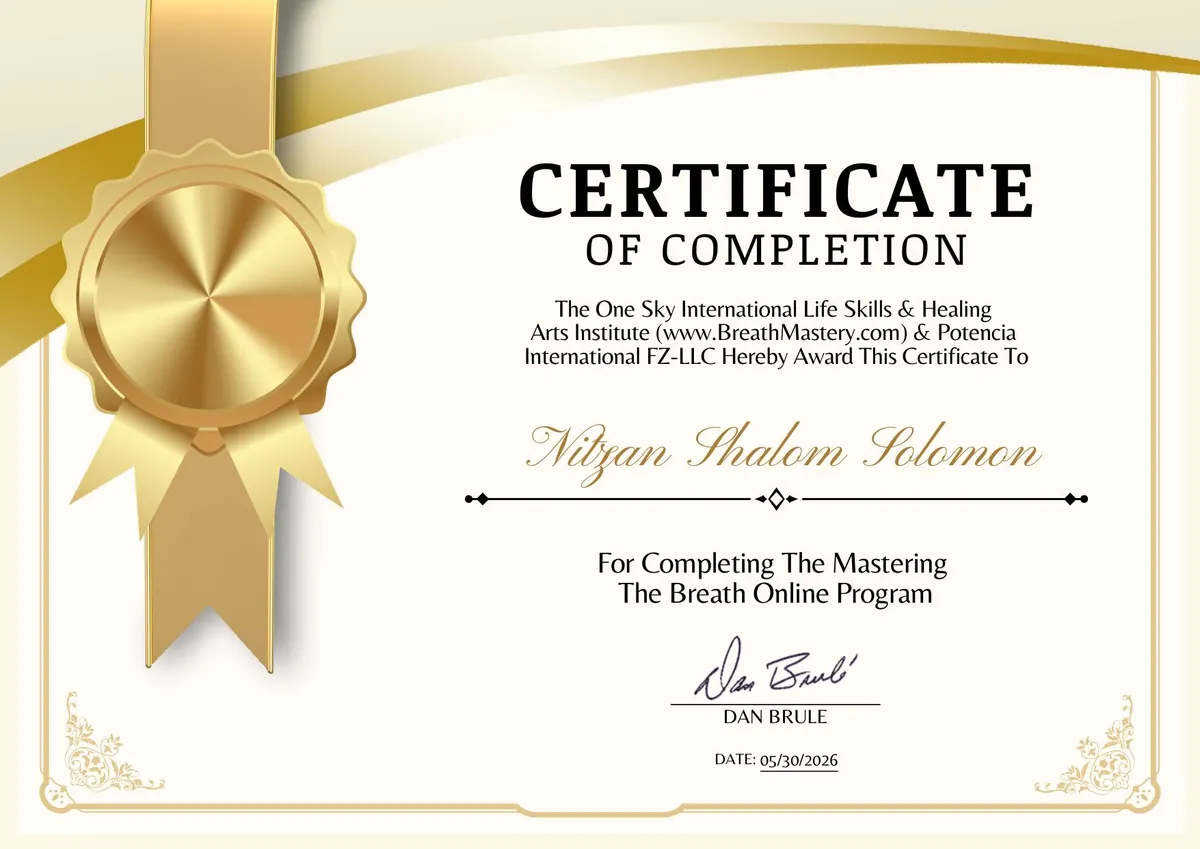
Mastering the Breath
One Sky International Life Skills & Healing Arts Institute Dan Brulé
Breath as a deliberate tool rather than a relaxation exercise — including when not to use it.
Programme completed. Further breathwork practitioner study is ongoing.
-
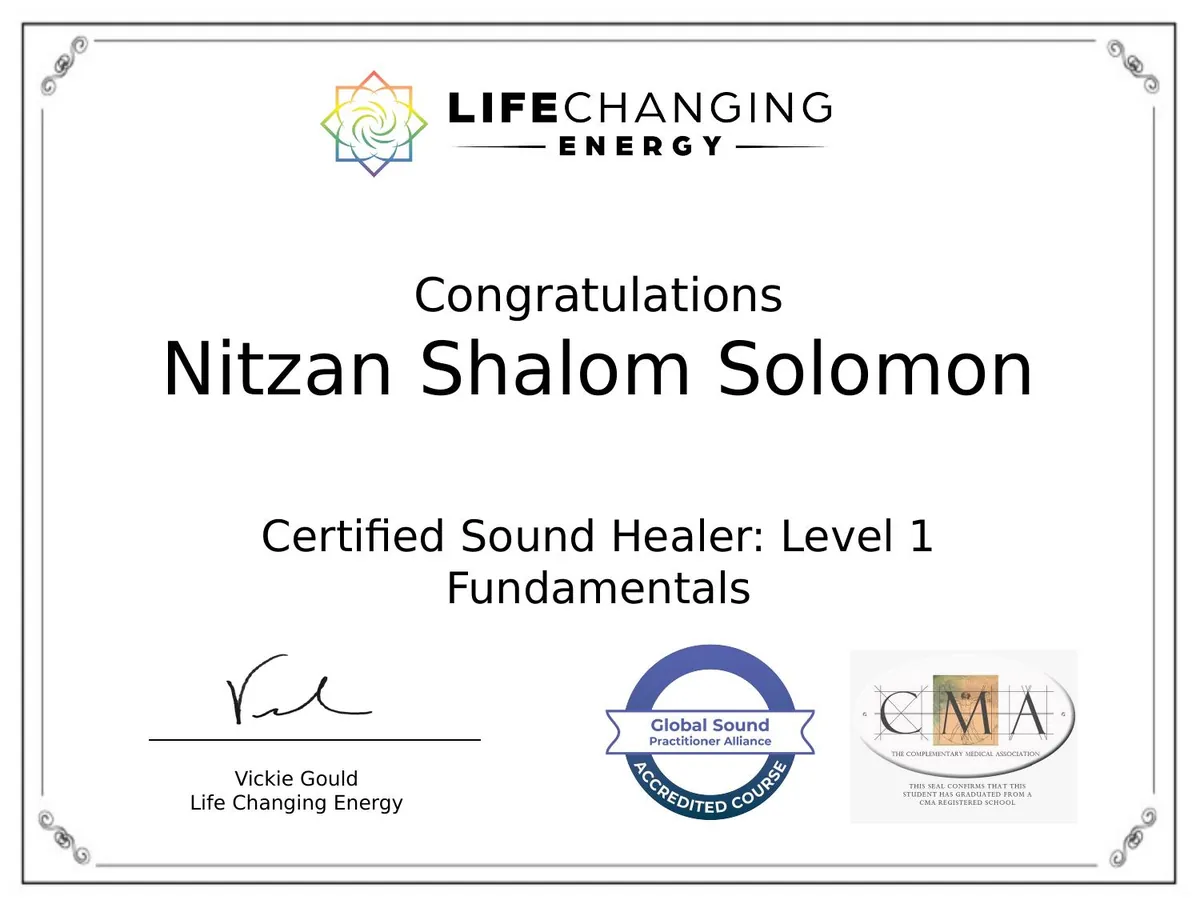
Sound Healing — Levels 1 & 2
Life Changing Energy Vickie Gould
Tuning forks, crystal and Tibetan bowls — sound as a way to reach what words are not reaching.
-
The Monroe Institute
The Monroe Institute
Programmes in consciousness exploration, studied rather than certified.
Common questions
Is this the same as a breathwork class?
No. A class runs one protocol for everyone. Here the breath is chosen for you, and sometimes the right choice is not to use it at all.
Can breathwork be unsafe?
Intense breathing is not appropriate for everyone — including some people with cardiovascular conditions, epilepsy, pregnancy, or certain trauma-related symptoms. I ask before, not after.
What if I get dizzy or emotional?
Both are common and neither is an emergency. We slow down or stop. Nothing here requires pushing through discomfort.
What instruments do you use?
Crystal and Tibetan bowls, tuning forks, and voice. Which ones depends on the person and the session.
Do I need to be musical?
Not at all. You are receiving sound, not performing it.
Can this be done online?
Breath can, and works well. Sound is better in person — recorded sound through a laptop speaker is not the same thing, and I would rather say so.


