
ONE-TO-ONE SESSION · AVAILABLE REMOTELY
Toxic Relationships & Narcissistic Dynamics
Personal online guidance after gaslighting, emotional control and relationships that are hard to leave — for women and men rebuilding boundaries, self-trust and the ability to choose.
Some relationships don’t end when they’re over.
- The person may no longer be in your life, but the conversations continue inside your head.
- You replay what was said, and wonder when you started drifting away from who you were.
There isn’t always one dramatic incident that explains it. There are hundreds of small ones — remarks, accusations, promises, silences — until you begin to lose confidence in your own judgement.
This is complementary one-to-one guidance for people living with, or recovering from, emotionally harmful relationship patterns. It is not psychotherapy, and it does not diagnose anyone.
The question is not only who hurt you. It is who you had to become inside this relationship — and how you find your way back.
- No diagnosis from a distanceWe look at what happened to you, not at what label fits someone absent.
- Women and menEmotional abuse does not depend on gender or physical strength.
- Safety before strategyWhere there is risk, specialist services come first and I say so.
- Complementary, not clinicalCoaching-informed guidance alongside professional care, never instead of it.
Recognising it
How do you know a relationship is causing harm?
You do not need a diagnosis of the other person. You need to see whether a pattern has formed in which your safety, freedom and sense of worth are being worn away over time.
Three words get used loosely and are worth separating. Emotional abuse means repeated humiliation, threats, isolation or intimidation. Coercive control means restricting someone’s freedom through monitoring, dependency and pressure. Gaslighting means undermining a person’s trust in their own memory and judgement.
Narcissistic Personality Disorder is a clinical diagnosis made by a qualified professional. It is not a synonym for any of the above, and someone without it can still cause serious harm.
The question is not how many you ticked. It is whether the pattern is still going.
Signs worth examining
- Every attempt to discuss hurt becomes an accusation against you
- You think twice before every sentence
- You no longer recognise how you react
- You are always proving you are a good person
- Your no is met with pressure, guilt or punishment
- You know it hurts, and still can’t leave
- Sleep, focus and friendships are paying for it
What we work with
The patterns that bring people here
Gaslighting
You check old messages to be sure you are not imagining it. The work is rebuilding the line between fact, interpretation and assumption.
Trauma bonding
Affection and harm alternating can create an attachment that is hard to release. It is not weakness, and not proof the relationship was good.
Boundaries that collapse
A boundary is not an ultimatum. It is what you are willing to take part in — and where there is risk, safety planning comes first.
Men who are not believed
In a CDC survey, 45.1% of men and 49.4% of women reported psychological aggression from a partner. Harm does not depend on strength.
Children in the middle
When the conflict outlives the relationship, children can become messengers. They are not supposed to choose a parent.
Life after
Sleep, friends, interests, decisions made from your own values rather than someone else’s expected reaction.
The shift this work is for
From proving to choosing
Most people arrive trying to win an argument that is already over — to establish, finally, that it really happened.
Organised around them
Most of the attention goes outward:
- Collecting evidence
- Rehearsing conversations
- Explaining yourself again
- Waiting for an apology
- Searching for the right label
And so the person who hurt you keeps deciding how your days go.
Organised around you
It starts when a different question becomes possible:
If I no longer have to prove what happened — what do I want to build now?
- Trusting your own account
- Boundaries you can hold
- Separating the parent from the partner
- Deciding without their reaction
- A life that is yours to run
Nothing here requires the other person to change, to agree, or to take part. That is the point.
Who this is also for
Men are harmed too, and narcissism is not a gender
Emotional abuse does not depend on physical strength, and no one has to show bruises for the harm to be real.
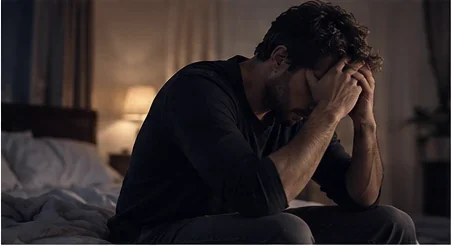
Some men live for years beside a partner whose reaction they fear — not because she is stronger, but because they know what disagreement costs. When they say so, they are sometimes asked what she could possibly do to them. Quite a lot.
Female narcissism is not a separate diagnosis, and it is not found in appearance, clothing or confidence. What is worth examining is repeated behaviour: humiliation, control, blame, financial restriction, affection used as leverage.
Recognising harm to men takes nothing away from women who have experienced violence. There is no gendered ownership of pain here, and no gendered exemption from responsibility.
A man who has been hurt is not less of a man. He is a person who has been hurt.

When there are children
The conflict that outlives the relationship
You can separate from a partner. When you share children, the connection continues — and sometimes the harmful dynamic changes shape rather than ending.
Arguments about love and money become struggles over parenting time, holidays, messages and decisions. Not every difficult divorce is abuse. But when children become instruments of pressure, it is no longer only about the adults.
Children need stability, protection, and the freedom to love both sides without fear. Where a child is endangered, protection comes before contact.
I do not settle parenting disputes. Part of a session can be separating what you experienced as a partner from what you need as a parent — alongside legal advice and child protection services, never instead of them.
What children are not
- 1Messengers carrying reports between two homes
- 2Investigators gathering information
- 3Judges deciding which parent was right
- 4Proof of loyalty to either side
No child should become a weapon in their parents’ war.
What this is for
Not another war to prove who the narcissist is
- No diagnosis
- No ultimatums
- No scripts to win with
A process that puts the person, the parent and the ability to choose back at the centre of a life.
You do not have to receive an apology to start coming back to your life.
The lens I work through
The Jungian lens: persona, shadow, and the way back
As a certified Jungian coach I use ideas from Carl Jung’s work as a framework for reflection — on the roles we take, and the ones we keep repeating.
The persona is the face we keep up to prevent a storm — and inside a difficult relationship it can become so fixed that we forget what it is like not to adjust ourselves to someone else’s mood. The shadow is what we learned to reject in ourselves: anger, the need for space, the wish to say no.
This is not Jungian psychotherapy. It is a way of widening the question from what happened to you toward who you are when you are no longer organised around someone else.
Your shadow is not the reason someone abused you. You did not attract harm with a low frequency, and you do not need to blame yourself in order to grow.
What we look at
- Persona · the face kept up to keep the peace
- Shadow · what was easier not to admit
- Roles · the ones that keep recurring
- Individuation · who you are outside the role
What actually happens
How the session works
Sessions are one to one and take place online. We focus on you rather than on analysing someone who is not in the room.
The shape of the work
- Putting the story in order. You don’t have to tell every detail, or relive painful events to justify asking for support.
- Separating facts from interpretations and assumptions — including what cannot be known about the other person.
- Looking at your own place in the dynamic, to widen the options in front of you now, not to assign you blame.
- Phrasing boundaries you can actually hold, and telling what is in your control from what is not.
- Building what comes after: relationships, routine, independence, parenting, the parts of you that were pushed aside.
What a session may include
- Focused conversation
- Jungian reflection
- Mapping patterns
- Phrasing boundaries
- Grounding and breath
- Planning next steps
- Referral where needed
There is no fixed number of sessions and no guaranteed outcome. Where there is threat or risk, a referral for professional safety planning comes before anything else.
Who the session is for
Women and men who have lost clarity, confidence or a sense of choice inside a difficult relationship.
You may still be in it, or long out of it. You may be co-parenting through conflict, or noticing the same pattern turning up in a new relationship. You do not need a diagnosis, or a tidy explanation.
- Still in the relationship
- After a separation
- Co-parenting in conflict
- Repeating patterns
- Not sure what it was
Only a real interest in understanding your own experience and your options.
What it does not replace
Said plainly, because the difference matters.
If you are in immediate danger, or facing threats, stalking, violence or harm to children, turn to emergency services or to specialists in domestic violence. In Israel: welfare line 118, police 100.
- Significant depression, post-traumatic symptoms or psychological crisis need qualified mental health care first
- This is not psychotherapy, diagnosis or legal advice
- It does not replace clinical parenting guidance or child protection services
- It can sit alongside all of those — never instead of them
Why I do this work
I’ve been there too
One of the reasons I came to this work was my own experience of what I understand to have been narcissistic abuse.
It took me seven years to understand it, take the patterns apart and rebuild — while life carried on without pausing to let me.
What I had to learn again were things that once seemed obvious: to trust my own judgement, to know when to say no, to tell compassion from self-abandonment and responsibility from guilt someone else was handing me.
I don’t offer my experience as a substitute for clinical training, and I don’t assume your story is mine. I bring it because it is a real part of the road that brought me here — more about me and how I work.
I know the distance between understanding that something is hurting you and managing to live differently.

Common questions
How do I know whether my partner is a narcissist?
You cannot diagnose anyone from a list of signs online. Narcissistic Personality Disorder is diagnosed by a qualified professional. You can examine patterns of control, humiliation, gaslighting and boundary violations without reaching a diagnosis of the other person.
What is the difference between a toxic relationship and emotional abuse?
“Toxic relationship” is a general term, not a clinical one. Emotional abuse means harmful patterns such as threats, humiliation, isolation, control and intimidation. Not every difficult or ill-matched relationship is abusive.
Can men experience narcissistic abuse?
Yes. Men experience emotional abuse, manipulation, financial control and humiliation from partners. In a CDC survey, 45.1% of men reported psychological aggression by an intimate partner during their lifetime.
What is trauma bonding?
A term used for the strong attachment that can form inside harmful relationships, where affection and harm alternate and there is an imbalance of power. It is not a formal psychiatric diagnosis, and not every difficulty moving on is one.
Is cutting off contact always the answer?
No. It depends on safety, shared children, legal obligations and the risk of escalation. Blanket advice to go “no contact” can be impractical or unsafe, which is why safety planning is matched to the situation.
Can I come while I am still in the relationship?
Yes, as long as you can take part privately and safely. You do not need to have decided to separate. Where there is threat or violence, specialist safety support comes first.
Is this psychotherapy?
No. It is complementary personal guidance combining coaching, conversation and reflection. It does not include diagnosis, psychotherapy or medical treatment.
Are sessions held remotely?
Yes, sessions are currently online. Choose a private place, and avoid a device someone else may be monitoring.
Sessions at Quantum Healing Field are complementary guidance and do not constitute a medical or psychological diagnosis, psychotherapy, legal advice or a substitute for qualified professional services.

Nitzan Solomon · Certified Jungian coach
Start where you are
You don’t need a diagnosis, a tidy explanation or a decision already made. A first conversation is enough to see what this could look like for you.