
ONE-TO-ONE SESSION · AVAILABLE REMOTELY
Anxiety, Low Mood & Emotional Wellbeing Support
Complementary support for overwhelm, anxious patterns, emotional steadiness and reconnecting with everyday life.
There are times when the mind simply will not slow down.
- Everything feels urgent.
- Thoughts race ahead.
- The body stays alert.
- Sleep changes.
It becomes difficult to relax — and sometimes difficult even to understand what you are supposed to be relaxing from.
At other times, almost the opposite happens. Everything feels heavy. Energy drops. Motivation disappears. Things that once mattered no longer seem to reach you. And sometimes both states exist at the same time.
The mind is moving constantly while the person inside it feels stuck.
There is not always a clear name for this, and you do not have to begin with a label or a diagnosis. You can begin with what is actually happening now.
This is a complementary one-to-one session for emotional wellbeing, reflection and grounding, drawing on breath, awareness, holistic health, Jungian reflection, guided imagery and sound — chosen according to the person in front of me and what is right for them at that moment.
This is not psychotherapy, diagnosis, medical treatment or psychiatric treatment for anxiety disorders or depression.
We start with what is happening. Not with what it should be called.
The order matters more than the technique.
- Ground first
- Explore later
- Ground firstStability and routine before anything else
- One-to-onePersonal support, held remotely
- Alongside careCan sit beside existing psychological or psychiatric care
- Not clinicalNot diagnosis, psychotherapy or medication advice
Where we begin
Start With What Is Actually Happening
Sometimes we rush to ask: what is wrong with me? I prefer to begin with a different question — what is happening for you?
That question is not a softer version of the first one. It is a more useful one. A label describes a category; the details describe a life, and the details are what we can actually work with.
We are not trying to fix you. We are trying to understand together what your system is doing right now — and what might help it move, gradually, toward more steadiness.
The questions we start from
- What does the morning look like?
- What happens when the phone lights up?
- How does the body respond to uncertainty?
- Which thoughts keep returning?
- What have you started avoiding?
- What has dropped out of your routine?
- Where do you hold tension?
- And what, even briefly, brings back some quiet or sense of control?
What we may explore
What We Can Work With in a Session
Depending on what is needed, a session may draw on any of these. There is no fixed protocol. Nothing is forced.
Grounding and body awareness
Noticing where you actually are before deciding what to do about it.
Gentle, directed breath
Breath used deliberately rather than as a general instruction to calm down.
Meditation and mindfulness tools
Only when they fit. Not everyone needs meditation.
Guided imagery and relaxation
A way in for people who find talking about it harder than picturing it.
Working with sound
Tuning forks, crystal and Tibetan bowls, used for settling rather than spectacle.
Routine and sleep habits
Often the single most practical lever when everything feels unstable.
Recurring thought patterns
Recognising the loop before trying to argue with it.
Pressure at work and in relationships
Where the stress is actually generated, most of the time.
Boundaries and the difficulty of saying no
A large share of overwhelm is simply too many yeses.
Reconnecting with meaning and direction
What made the days feel like yours, and what happened to it.
Returning to things that disappeared
The hobby, the people, the walk — the parts that quietly fell away.
Jungian work with shadow, persona and archetypes
For difficulty that is not one event but a pattern returning in different forms.
What is in your control and what is not
Clarity here removes more pressure than almost anything else.
Small steps you can actually take
Chosen to be achievable on a difficult day, not an ideal one.

In plain language
Anxiety Is Not One Word
Fear, pressure and tension are part of being human. Anxiety disorders are clinical conditions that may require professional assessment and treatment. These are not the same thing, and the difference decides what kind of help is right.
I do not diagnose anxiety disorders and I do not treat them.
But there is a wide space in which a person can experience tension, alertness, overthinking, avoidance, difficulty settling or a sense of overwhelm — and want to build more grounding, routine and self-awareness alongside it. That is where complementary work can be genuinely useful.
When anxiety is severe or persistent, when it causes significant panic episodes, wide avoidance or real impairment in daily functioning, it needs proper assessment from a mental-health or medical professional as well.
There is a wide space between ordinary pressure and a clinical condition. Most people who write to me are somewhere inside it.
In plain language
Low Mood Is Not Always Depression
There is a difference between a hard period and clinical depression.
Low mood can follow a separation, overload, burnout, a loss of direction, a major life change or a complicated relationship — and sometimes there is no single cause to point at.
Clinical depression can involve a sustained change in mood, sleep, energy, motivation, thinking and the ability to function, and it may require professional treatment. I do not diagnose depression and I do not offer treatment for it.
The work here can serve as a complementary layer — focused on routine, grounding, awareness, meaning, connection to the body, and a gradual return to the things that make a day feel like a life.
A hard period and a clinical condition can look similar from outside. Knowing which one you are in is worth a professional opinion.

The distinction that matters
Complementary Support and Clinical Treatment Are Not the Same Thing
This is the clearest way I can put the difference. Both can be valuable; only one of them is what this page offers.
What I offer here
- Complementary wellbeing support
- Grounding, routine, breath, awareness
- Jungian reflection on patterns
- Practical steps between sessions
- One-to-one, remote
- Can sit alongside professional care
What belongs to a licensed professional
- Diagnosing anxiety disorders or depression
- Psychotherapy and clinical treatment
- Any decision about medication
- Crisis and risk assessment
- Structured trauma processing
- Treatment plans and clinical records
If you need the right-hand column, that is where to start — and this work can still sit beside it afterwards.
The approach
This Is Not Forced Positivity
One of the things I do not do is tell someone who is suffering to “just think positive,” or “raise your vibration,” or “everything happens for a reason.” Sometimes those sentences only add guilt on top of pain that is already there.
- Eat something
- Sleep
- Ten minutes outside
- Answer one message
- Take a shower
- Set one boundary
- Ask for help
- Turn off the screen
There are days when the next step is not becoming the highest version of yourself. The next step is smaller, and it counts: returning to a song, a person, a place or an action that reminds you that you are still here.
Grounded work begins where you actually are — not where you think you are supposed to be.
Time & rhythm
How Long Does This Take, and How Often?
There is no fixed number of sessions and nothing to commit to in advance. Some people come once around a specific question; others work over a period while something is changing. A session runs about 60–75 minutes, and the rhythm is usually weekly or fortnightly at the start, spacing out as things steady.
How a period of work usually unfolds
- Listening and mapping
- One or two small experiments
- Looking honestly at what happened
- Keeping what helped
- Spacing out as stability returns
Before a session
- Nothing to prepare
- A room where you can speak freely
- Headphones if the house is busy
- Water nearby
- A notebook if you like writing
- No need to have the words ready
The aim is to need this less, not more.
Between sessions
The Part That Happens Without Me
Most of what changes does not happen during the hour we spend together. It happens in the ordinary week around it.
That is why the steps we choose are deliberately small. A plan that only works on a good day tells you nothing, because the days that matter are the other ones.
So we pick something that survives a bad morning: a fixed finishing time, two minutes before the phone, one walk, one message answered, one boundary said out loud. Then we look at what actually happened — not whether you performed it correctly.
Small enough to do on a difficult day is the only size that counts.

The first session
What a First Session Looks Like
Sessions are one-to-one and held remotely. In the first one we mostly listen and map.
We look at how the days actually are
What changed, when it started becoming harder, what weighs on you, what settles you, what you have already tried, what helped even slightly — and what you would want to feel different.
You do not need to arrive with an explanation.
You do not have to know what is wrong
There is no need to speak in therapeutic language or to have a name for everything. Starting from the ordinary details of a week is enough.
We choose one or two things to try
Small enough that you can actually do them — not an ideal-day plan.
- Two minutes of grounding before the phone
- A fixed finish time for work
- A short walk
- An activity that disappeared
- A conversation long postponed
- One boundary
Next time we look at what happened
What helped stays. What did not help changes or comes off the table.
There is no test here that you can fail.
When Professional Care Should Come First
Being honest about the limits of this work is part of the work. A doctor, psychologist, psychiatrist or other qualified professional should be the first address when any of the following is present.
- Anxiety, panic, sleeplessness or mood getting significantly worse
- Difficulty getting out of bed, eating or managing basic daily tasks
- A significant, sustained drop in functioning
- Thoughts of self-harm
- Thoughts that you do not want to go on living
- A sharp change in behaviour, thinking or sleep
- Physical symptoms that have not been medically checked
A number of medical and physical conditions can feel like anxiety, so when something new, strong or unusual appears, it is worth not assuming the cause is emotional. This work can sit alongside medical or psychological care when that is appropriate.
If There Is Immediate Risk
If you are in immediate danger, having suicidal thoughts, harming yourself, or in acute crisis, this page is not the right help.
Contact your local emergency services or a qualified mental-health professional immediately. That is not a smaller step than booking a session. It is the right one.
Within the field
Where This Sits Within Quantum Healing Field
This is one of the most grounded forms of work within Quantum Healing Field. It connects body, awareness, everyday structure and meaning — without turning every emotional difficulty into a mystical story.
Depending on what comes up, the work may lean on breathwork, on ideas from holistic health and integrative healing, or on Jungian reflection about patterns, shadow and persona.
If the overwhelm is connected to a difficult event or a traumatic experience, trauma-informed support and integration may be the better route. If the main source is a harmful, manipulative or eroding relationship, you can read about support with toxic and narcissistic dynamics.
Quantum Healing Field can be mystical elsewhere. When someone is overwhelmed, nothing mystical is pushed on them.
Who this may be for
This Session May Suit You If
You are in a period of overload
Pressure, stress or overwhelm, and you want to build more steadiness around it.
There are anxious or overthinking patterns
And you would like to understand them better rather than only fight them.
Your mood is low
And you want to begin returning, gradually, to movement and meaning.
You are already in therapy
And you want a complementary, practical layer beside it.
You want body, awareness and routine together
Rather than only talking, or only technique.
You prefer small changes you can live with
Over a rigid programme that collapses on the first difficult week.
Questions About Anxiety, Low Mood and This Session
Do you treat anxiety or depression?
No. I offer complementary wellbeing support and tools for reflection, grounding and routine. I do not diagnose, and I do not provide psychotherapy, medical treatment or psychiatric treatment.
Can I work with you alongside psychological or psychiatric care?
Yes. That is often the most natural place for this work — a complementary layer beside existing professional care. I do not replace your therapist or doctor, and I do not change a treatment plan they have given you.
Is the whole session meditation?
Not at all. Meditation is one possible tool among several. A session can be mostly conversation, mapping, work with habits, breath, guided imagery, sound, or a combination.
Will you advise me to stop taking medication?
No. Decisions about starting, changing or stopping medication belong to the doctor or qualified professional looking after you medically.
Is energy work required?
No. You can work in an entirely grounded way. No energetic, spiritual or meditative tool is a condition of the session.
What if I do not know what is wrong?
That is completely fine. You do not need a diagnosis or a tidy story. We can start from the everyday and see together what emerges.
What if I do not have the energy for any of this?
Then we start smaller. The aim is not to hand an already overwhelmed person another list of tasks. Sometimes the work begins with one small step that is possible even on a hard day.
Can this suit me if I am sceptical about spiritual or energy work?
Yes. You do not need to hold any spiritual belief to work with breath, awareness, boundaries, habits, routine, meaning and patterns. We use only what feels relevant and actually helps.
Are sessions remote?
Yes. Sessions are one-to-one and held remotely, which also means you can do them from a room where you already feel comfortable.
The background I bring
Relevant Training & Background

Doctor of Holistic Health (DHH)
A broad holistic-health programme covering anatomy, nutrition, herbal medicine, lifestyle and integrative views of health. One of the practical, grounded layers under this work. A holistic-health credential — not a medical degree, and not a licence to practise medicine.

Certified Jungian Coach
Work with shadow, persona, archetypes, individuation and patterns that repeat across a life. One of the frames I use when the difficulty is not a single event but something returning in different forms. Coaching training in Jungian frameworks — not a psychotherapy qualification.
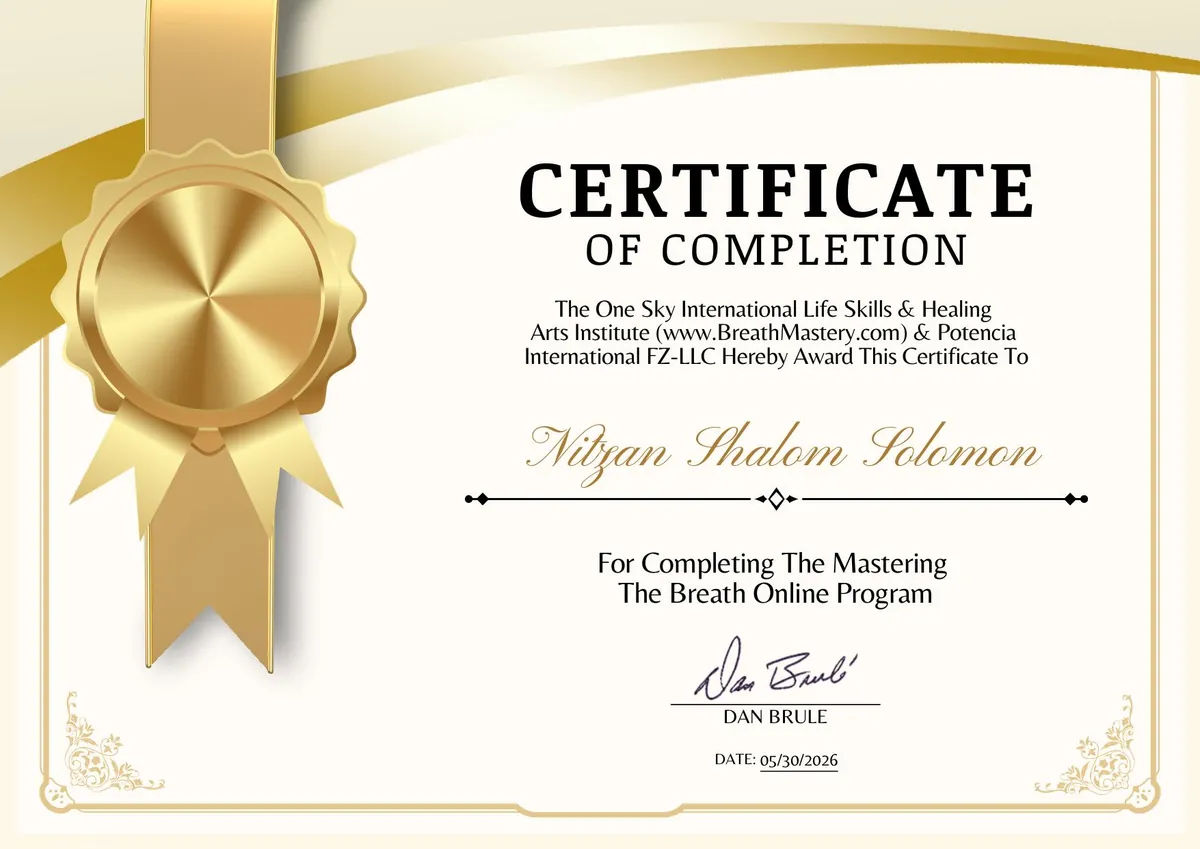
Mastering the Breath
A deep study of breath as a conscious, directed tool — not only a way to relax, but a way to work with the state of the body, attention and experience. Programme completed; further practitioner study ongoing.
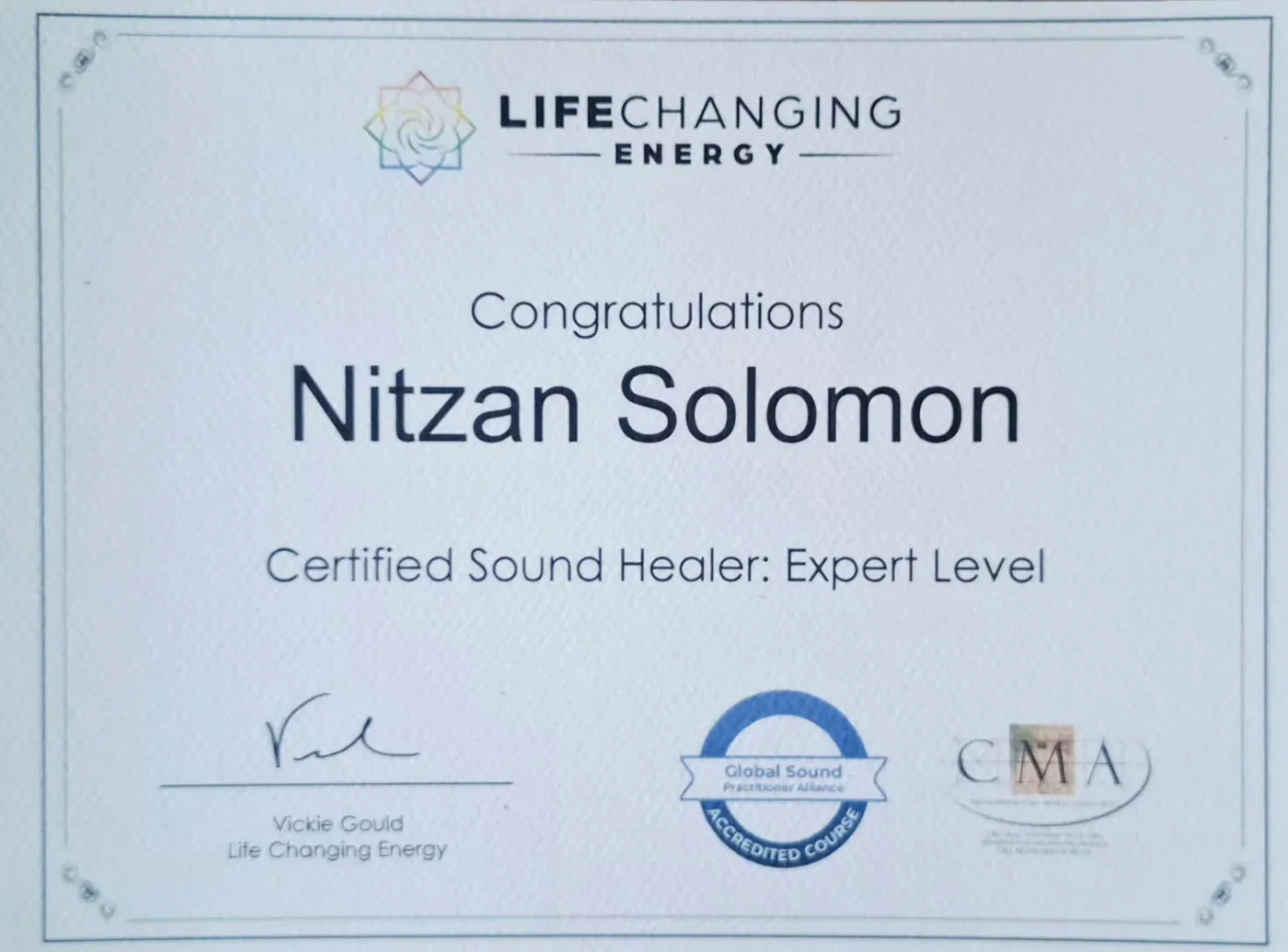
Certified Sound Healer · Expert Level
Accredited by the Global Sound Practitioners Alliance and the CMA. Tuning forks, crystal and Tibetan bowls as part of a wider toolkit for relaxation, presence and experiential work.

ANXIETY, LOW MOOD & EMOTIONAL WELLBEING SUPPORT
You Do Not Need to Know Exactly What Is Wrong Before You Begin
We can start with what is happening now and explore what may help create a little more steadiness, space and choice.
Not a programme to live up to. One or two small things that are possible this week, and an honest look at what they changed.