Session
Trauma-Informed Support & Integration
COMING SOON · REMOTE 1:1 SUPPORT
Some experiences end, but the body and mind do not immediately receive the message that the danger is over.
A person may continue to feel watchful, tense, disconnected, easily overwhelmed, or emotionally pulled back toward something that happened long ago. For others the effects are quieter: difficulty trusting, trouble resting, repeating relationship patterns, avoiding certain situations, feeling numb, or living as though something is about to happen.
This is a complementary coaching and wellbeing space for exploring what happened, how it may still be shaping the present, and what helps you build steadiness, choice and connection with yourself.
This is not trauma therapy, psychotherapy or PTSD treatment. If you have PTSD or another trauma-related mental-health condition, this work is designed only as a complementary layer and should not replace care from an appropriately licensed professional.
Trauma Is More Than the Story
Two people can go through similar events and respond very differently. What matters is not only the event, but how the nervous system responded, what support existed afterward, what meaning was made of it, whether there was any control or choice, and what patterns remained once it was over.
The purpose here is not to make you relive everything. It is to become more aware of what is happening now.
A Trauma-Informed Approach
A trauma-informed session prioritises safety, consent, pacing, choice, grounding, clear boundaries, and the ability to stop or change direction at any point.
There is no prize for going deeper or faster. If a process becomes too intense, slowing down is part of the work.
What We May Explore
Depending on your situation, sessions may include:
- identifying triggers and patterns
- grounding and present-moment awareness
- boundaries
- reconnecting gently with the body
- breath practices where appropriate
- guided imagery and meditation
- Jungian reflection on shadow, identity and meaning
- relationship patterns and rebuilding self-trust
- routines that support stability
This is not exposure therapy, and I do not attempt to reproduce or force traumatic memories.
About PTSD
PTSD is a diagnosable mental-health condition. I do not diagnose it and I do not provide clinical treatment for it.
If you have been diagnosed, suspect you may have it, or experience severe dissociation, flashbacks, panic, thoughts of self-harm or major difficulty functioning, licensed mental-health care should be part of your support. Complementary coaching can sit alongside that care where appropriate.
You Remain in Control
Nothing here should require you to hand over authority. You can say no, pause, change subject, decline an exercise, or choose a more grounded approach.
The goal is not to break through resistance. It is to build enough safety that choice becomes possible.
Where This Sits
This work sits between the more grounded and more experiential parts of the Field. It may draw carefully on Radical Healing concepts, Jungian coaching, meditation, breath and sound, and holistic-health perspectives.
But trauma is not a reason to use every modality available. Less is often more. Where relationship patterns are central, that work may fit better; where the ground has already shifted, Recovery & Rebuilding may.
Relevant Training
The background behind this work
-
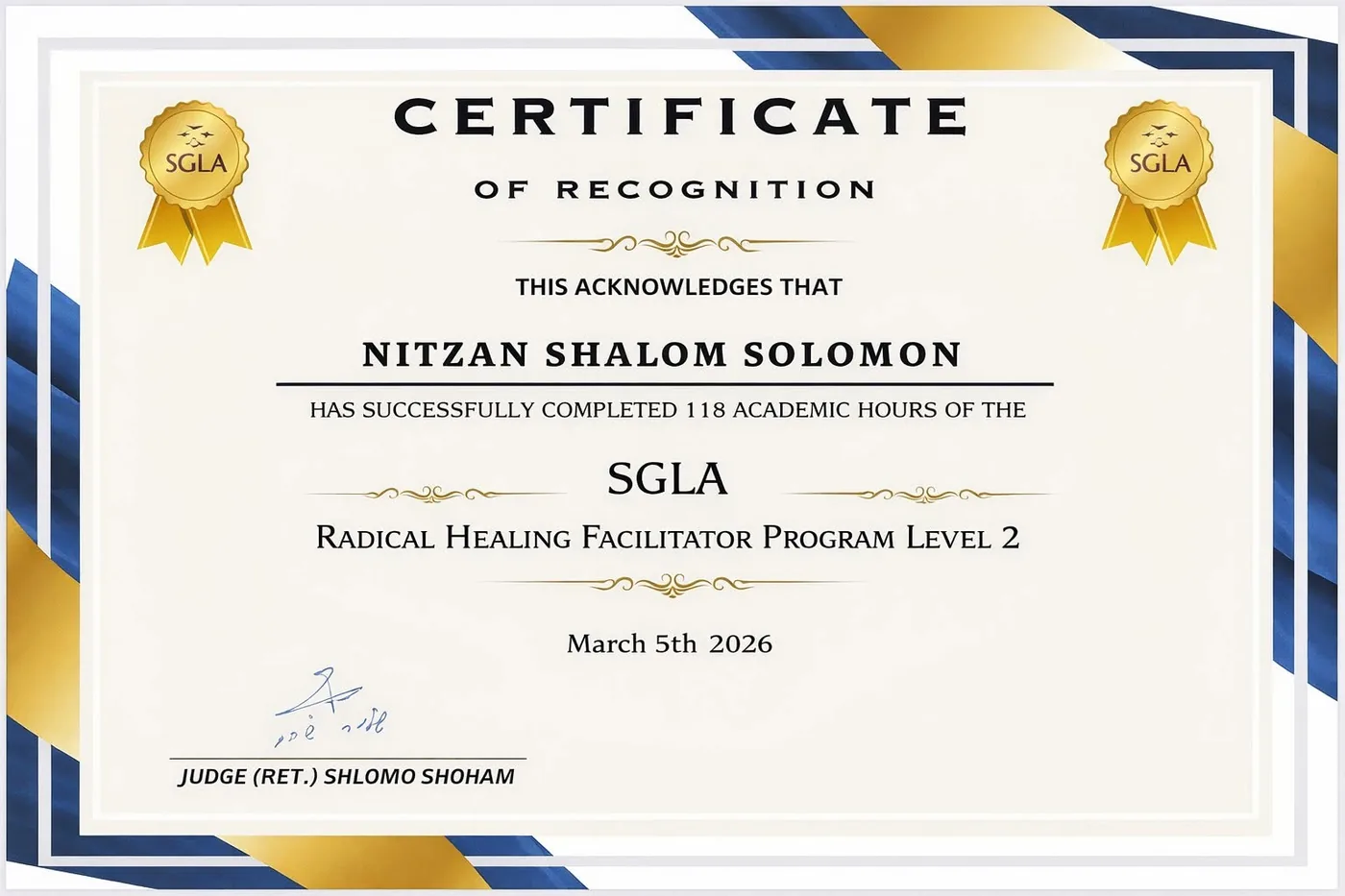
Radical Healing Facilitator — Level 2
SGLA Judge (ret.) Shlomo Shoham
Facilitation of Radical Healing — how a group process is held, and where the facilitator's responsibility begins and ends.
-
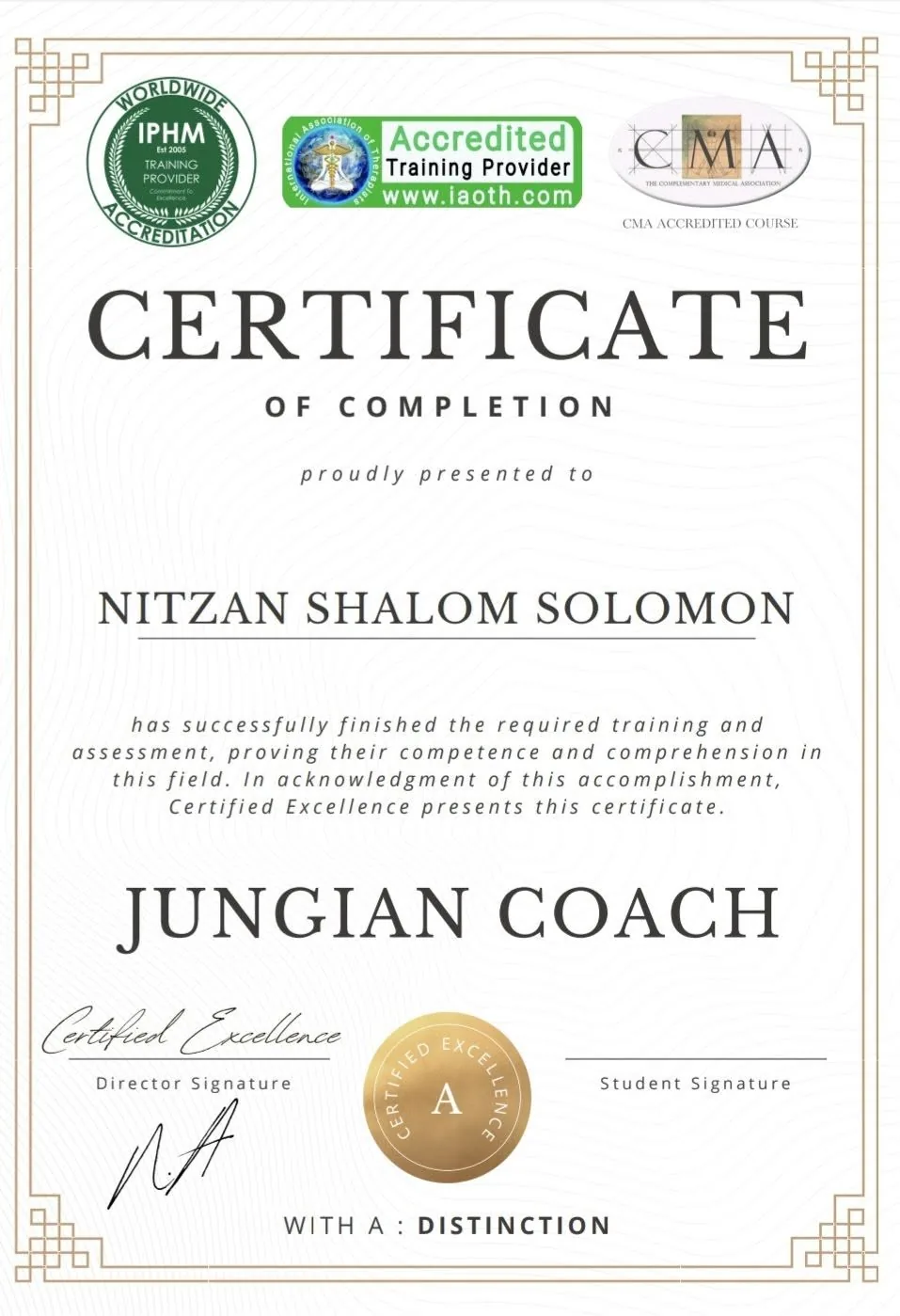
Certified Jungian Coach
Certified Excellence
Shadow, persona, archetype and individuation — the frame I use when someone's difficulty is a pattern rather than an event.
Coaching training in Jungian frameworks. Not a psychotherapy qualification.
-
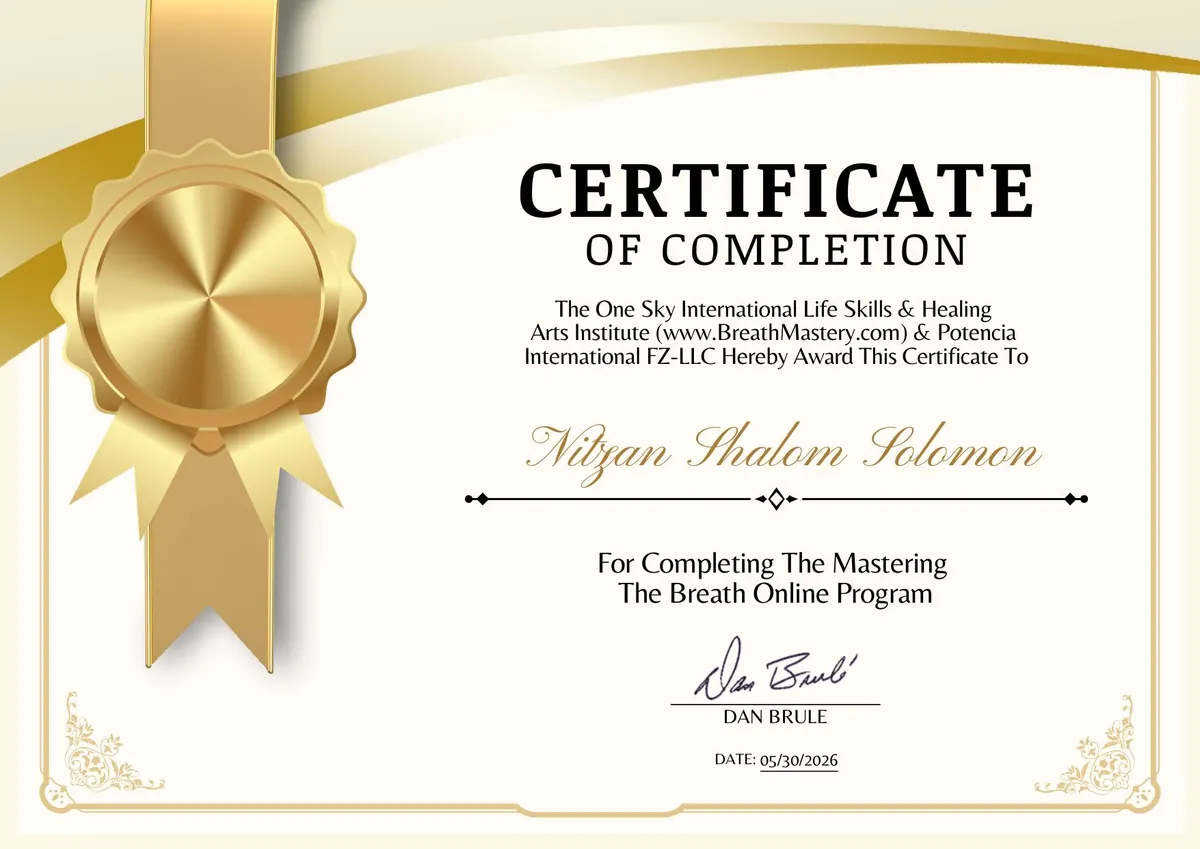
Mastering the Breath
One Sky International Life Skills & Healing Arts Institute Dan Brulé
Breath as a deliberate tool rather than a relaxation exercise — including when not to use it.
Programme completed. Further breathwork practitioner study is ongoing.
Common questions
Do you treat PTSD?
No. PTSD is a clinical condition and I do not provide psychotherapy or clinical treatment for it. This service may be used as complementary support alongside appropriate licensed care.
Do I have to describe the traumatic event in detail?
No. The work can focus entirely on the present, on current patterns, and on what helps you feel more grounded, without requiring a detailed retelling.
Can I continue seeing my therapist?
Yes. This is not designed to replace psychotherapy and can be used as an additional layer if it suits you.
Is breathwork always used?
No. Breath practices are optional and chosen carefully. More intense breathwork is not automatically appropriate for trauma-related symptoms, and sometimes it is the wrong tool.
Is this spiritual or psychological?
It can be either, depending on the person. Psychological, practical, symbolic and spiritual perspectives can coexist without pretending they are the same thing.
What if I start a session and it feels like too much?
We stop, or slow down, or change direction. That is not a failed session — knowing where your limit is and respecting it is genuinely part of the work.
How long does this take?
There is no fixed number of sessions and I would not trust anyone who promised one. Some people come for a few conversations; others work over a longer period. You decide as you go.
What if I do not know whether what happened counts as trauma?
You do not need a label or a diagnosis to begin. If something still affects how you live, that is enough of a starting point.


