Session
Toxic Relationships & Narcissistic Dynamics
COMING SOON · REMOTE 1:1 SUPPORT
Some relationships do not simply end.
They stay inside us.
We keep replaying conversations.
Questioning what actually happened.
Wondering whether we were too sensitive.
Trying to understand how something that began with connection, intensity or love gradually became confusion, guilt, fear, control or exhaustion.
Sometimes the hardest part is not leaving.
It is learning to trust yourself again afterward.
Toxic Relationships & Narcissistic Dynamics is a one-to-one supportive process for people who are trying to understand unhealthy relationship patterns, regain perspective, rebuild boundaries and reconnect with their own identity.
This work combines my personal lived experience, my certification and training as a Jungian Coach, and wider studies in psychology, meaning, consciousness, human behaviour and personal transformation.
It is not psychotherapy.
And I am not here to diagnose the person you were with.
I am here to work with you.
You Do Not Need a Diagnosis to Know Something Was Wrong
The word *narcissist* is everywhere today.
Sometimes it describes genuine narcissistic traits or patterns.
Sometimes it is being used for selfishness, emotional immaturity, manipulation, conflict or simply a relationship that became deeply unhealthy.
A formal diagnosis such as Narcissistic Personality Disorder belongs to appropriately qualified mental-health professionals.
Fortunately, you do not need to diagnose someone in order to examine what happened.
We can look at behaviours, patterns, dynamics and their effect on you.
When You Stop Trusting Your Own Reality
One of the most destabilizing aspects of an unhealthy relationship can be the gradual erosion of self-trust.
Part of the work is rebuilding that inner reference point.
Not by teaching you that your interpretation is always correct.
But by helping you become capable of examining your own experience without automatically abandoning yourself.
My Personal Connection With This Work
I did not become interested in toxic relationships only because I studied them.
I have lived through relationships and experiences that forced me to examine questions of attachment, control, boundaries, dependency, manipulation, identity and self-respect from the inside.
I do not use my experience as proof that I know exactly what yours is.
Your story is yours.
The Jungian Lens
My certification as a Jungian Coach gives me a particularly useful framework for this work.
The Shadow
The shadow is not simply “the bad part.”
It may also contain anger we were never allowed to express, strength we were taught was dangerous, sexuality, ambition, vulnerability, creativity, the ability to say no, or the part of us that knows when enough is enough.
Persona
The Persona is the face we present to the world.
The good partner.
The strong person.
The spiritual person.
The rescuer.
The person who never gives up.
A persona can become a prison.
Archetypes & Repetition
The rescuer.
The victim.
The hero.
The wounded child.
The ruler.
The rebel.
The caregiver.
The lover.
These are symbolic maps, not diagnostic boxes.
They can help us ask:
What role do I repeatedly play in relationships?
Individuation · Becoming More Fully Yourself
Recovery is not only:
“How do I stop thinking about them?”
It may also become:
“Who am I now?”
The deeper goal is not simply to become better at detecting “bad people.”
It is to become more difficult to abandon yourself.
Meaning After the Relationship
My wider approach is influenced by Viktor Frankl, particularly his emphasis on meaning and responsibility.
The question can gradually move from:
“Why did this happen to me?”
toward:
“What do I want to create from here?”
Other Influences
Other influences in my personal study include Wayne Dyer, alongside ongoing studies through Peterson Academy in psychology, philosophy, behaviour, meaning and human development.
Do not imply Peterson Academy itself certifies Nitzan as a clinician or Jungian practitioner.
Why Did I Stay?
Instead of using the question to punish yourself, we can use it to learn.
What kept me connected?
That is different from:
“What is wrong with me?”
Boundaries
Healthy boundaries are not walls around the heart.
They define where you end and another person begins.
Boundary work is not merely learning better sentences.
It often involves understanding why having a boundary feels dangerous in the first place.
When Spirituality Becomes Part of the Control
Spiritual language can also be used manipulatively.
“You are operating from ego.”
“You attracted this.”
“You are lowering the vibration.”
“My intuition tells me what you need.”
“The universe brought us together, therefore you cannot leave.”
None of those statements gives another person ownership over you.
Your spiritual beliefs should make you more sovereign, not easier to control.
What We May Explore Together
– unhealthy relationship patterns – narcissistic-style dynamics without diagnosing – gaslighting and erosion of self-trust – boundaries – attachment and emotional dependence – repetitive relationship patterns – shadow work – persona and identity – archetypal dynamics – individuation – guilt and responsibility – grief after separation – anger – rebuilding confidence – reconnecting with your own values – rescue patterns – difficult conversations – creating distance where appropriate – understanding what draws you back – conscious relationship choices
This is primarily a grounded conversation and coaching space.
If You Are Still in the Relationship
Where there is coercion, threats, stalking, physical violence or immediate danger, coaching is not an adequate substitute for specialized domestic-violence or emergency support.
Safety comes first.
What I Will Not Do
I will not diagnose your partner or former partner with Narcissistic Personality Disorder.
I will not tell you that every conflict is abuse.
I will not make major life decisions for you.
I will not use spirituality, cards or channeling to tell you whether you “must” leave or stay.
Availability
COMING SOON
This support will initially be offered as remote one-to-one sessions once the professional insurance and practice framework are complete.
Related work
Rebuilding trust in your own judgement after a difficult relationship overlaps heavily with recovery and rebuilding. Where the pattern is older than the relationship, Radical Healing works at that level. Holistic support helps when the nervous system has been running on alert for a long time.
Relevant Training
The background behind this work
-
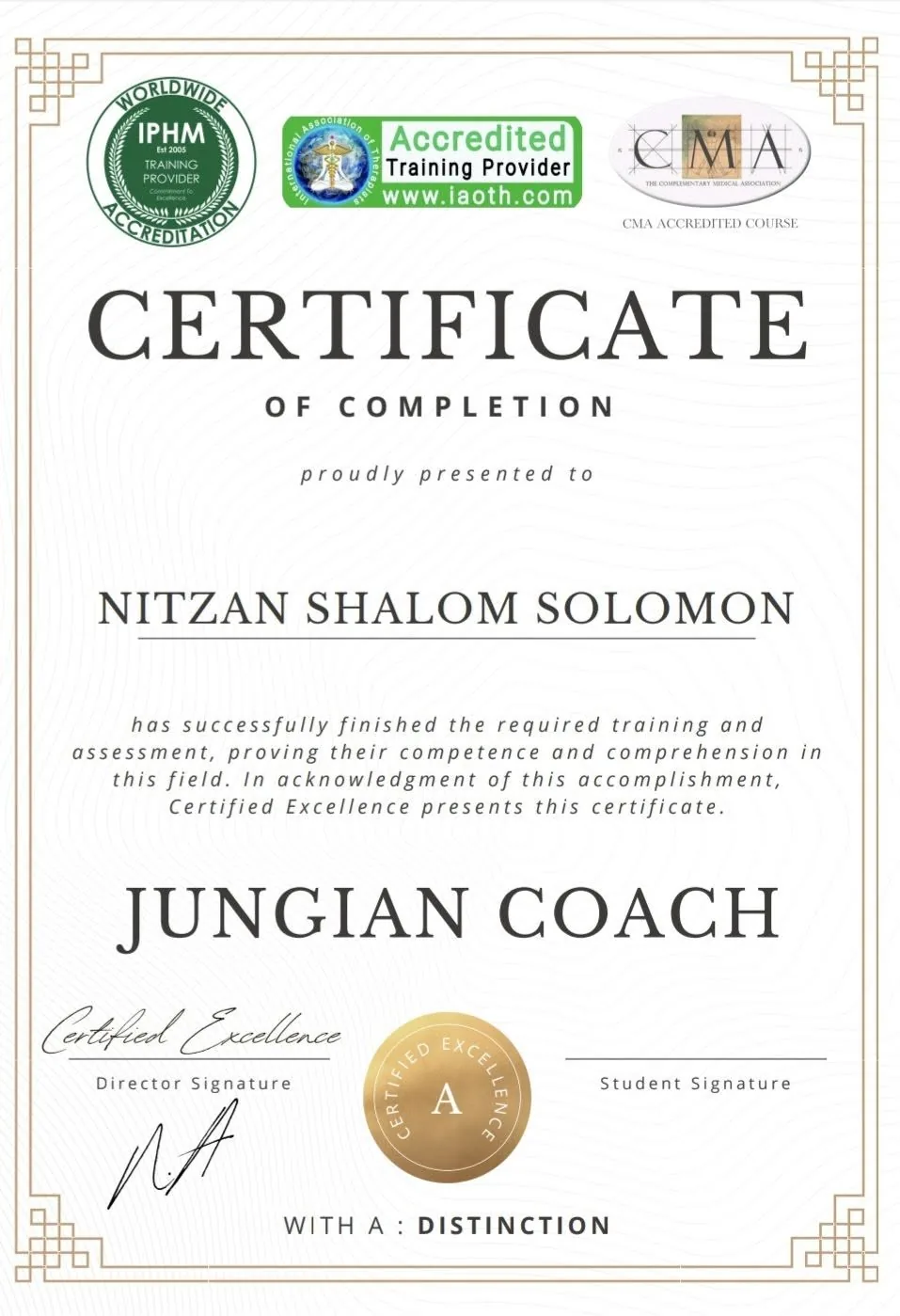
Certified Jungian Coach
Certified Excellence
Shadow, persona, archetype and individuation — the frame I use when someone's difficulty is a pattern rather than an event.
Coaching training in Jungian frameworks. Not a psychotherapy qualification.
Common questions
Do you diagnose narcissism?
No. Narcissistic personality disorder is a clinical diagnosis, and making one is outside what I do — least of all about someone who is not in the room. We work with the pattern you experienced.
What if I am the problem?
That question is usually a good sign, and it is worth looking at honestly. People who genuinely harm others rarely ask it.
Do I have to leave the relationship?
That is not my decision and I will not push it. Some people leave; some stay and change how they participate.
Is this couples work?
No. This is one to one, focused on your own clarity and boundaries.
How long does it take to trust your judgement again?
Longer than most people want, and it comes back in pieces rather than all at once. That is normal, not a setback.
What if it happened years ago?
Time does not automatically resolve a pattern. If it still shapes how you relate to people, it is current.


